Michael Guadagni Shares What It’s Like To Be a Working Artist

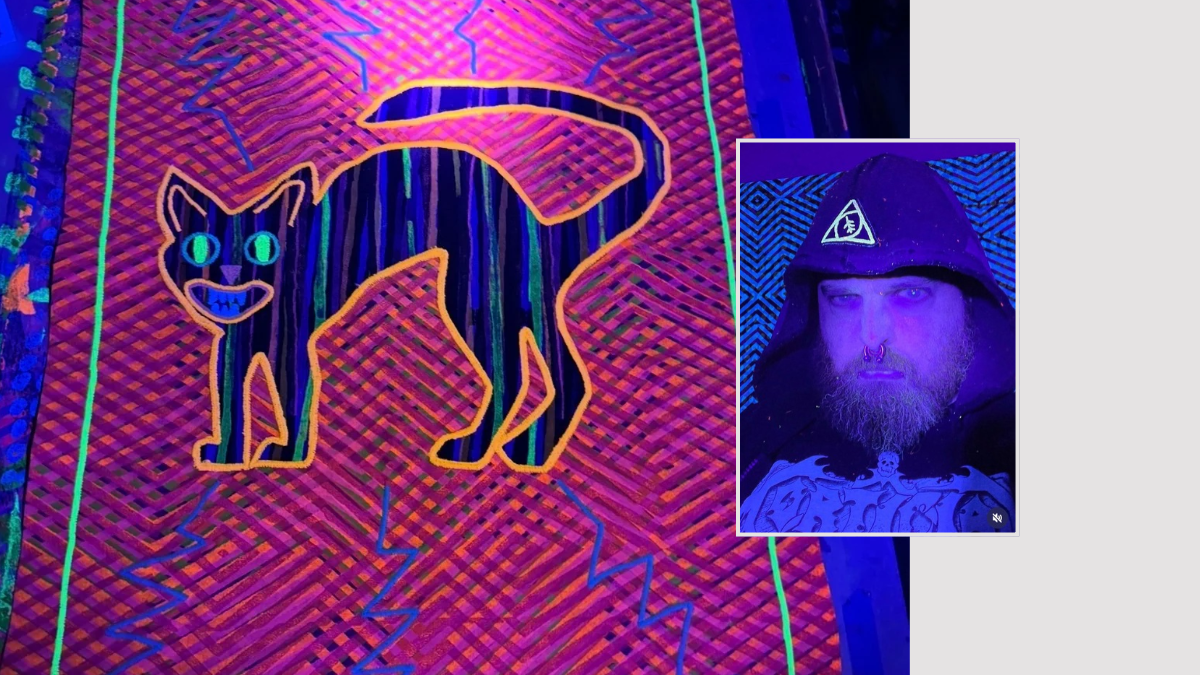
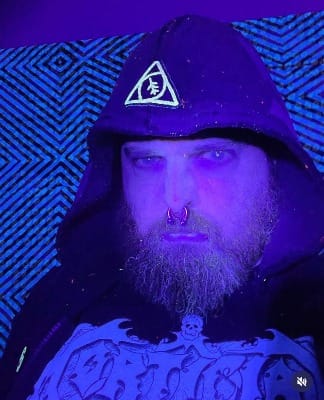
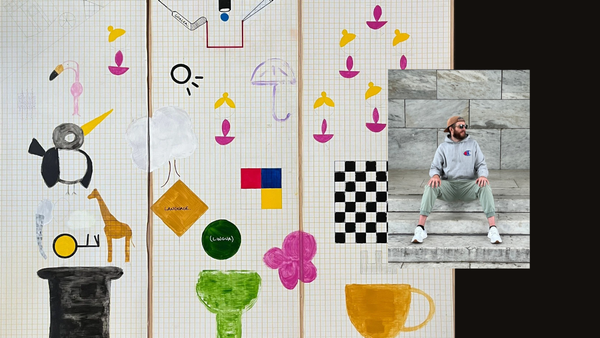
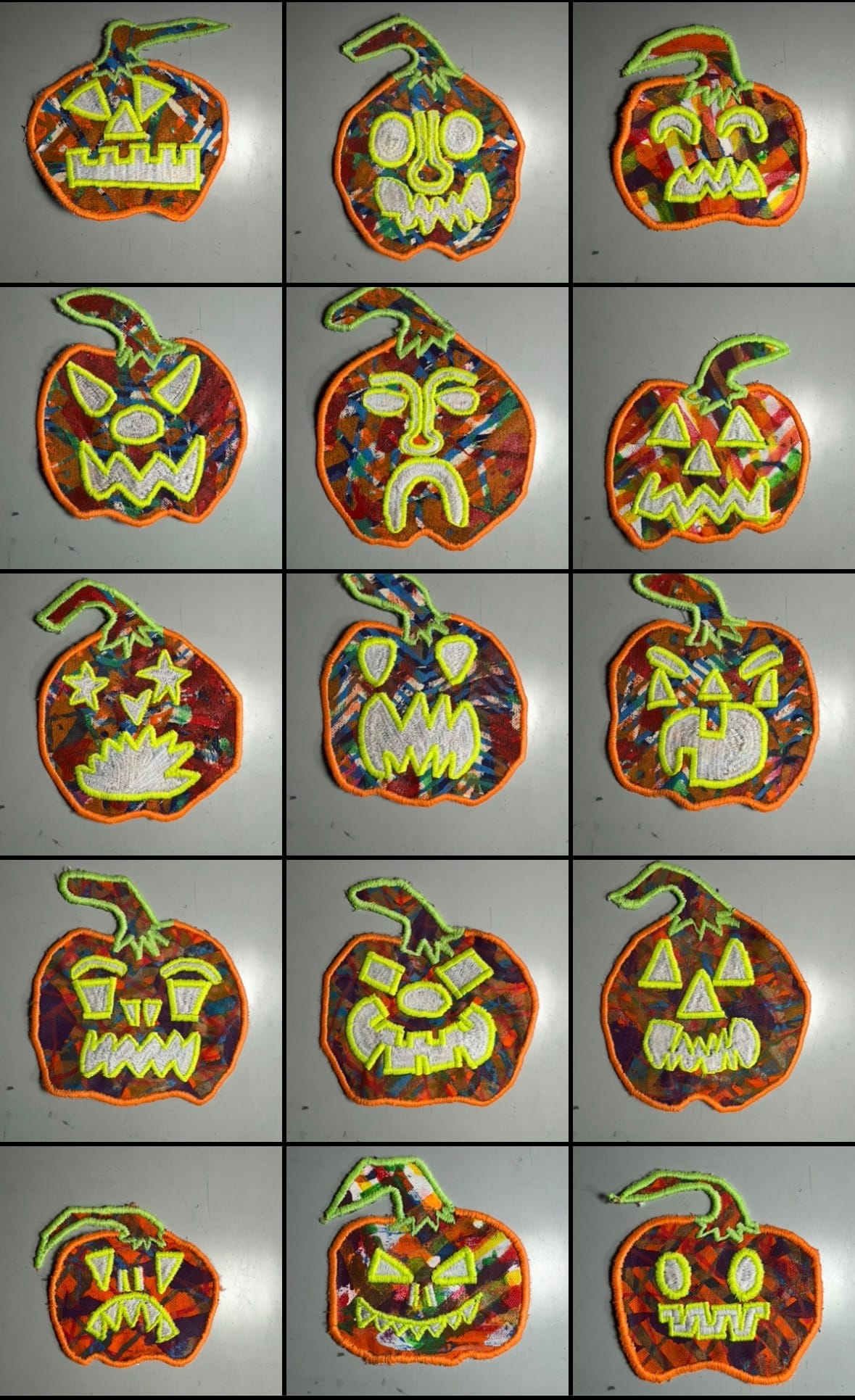
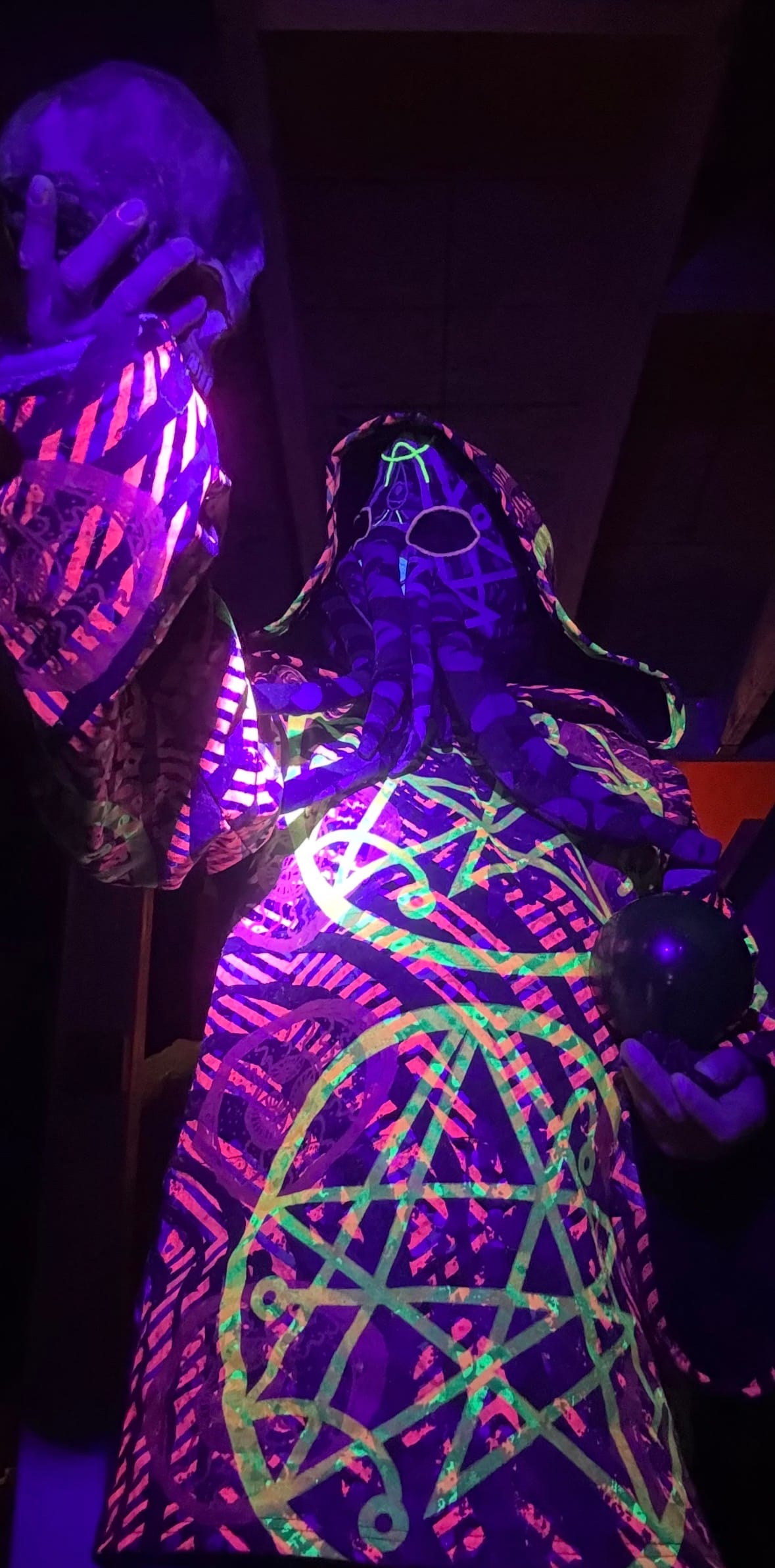
PROVIDENCE, R.I. – From his studio in Providence’s West End, Michael Guadagni screen-prints fabric in bright oranges and blues, then sews it into clothing, plushies, masks, patches and embroidered tapestries. He also stages performance art.
Michael was born with congenital adrenal hypoplasia, a condition in which the body can’t make its own cortisol, the hormone that helps it respond to illness, injury and stress. He was also diagnosed with ADHD as an adult.
In Michael's interview with Artisan Joy, the artist shares how an overcrowded shop class in high school led him to printmaking, why he’s trading social media for meeting people in person, his advice for new creative entrepreneurs and more.
Tell us about your art.
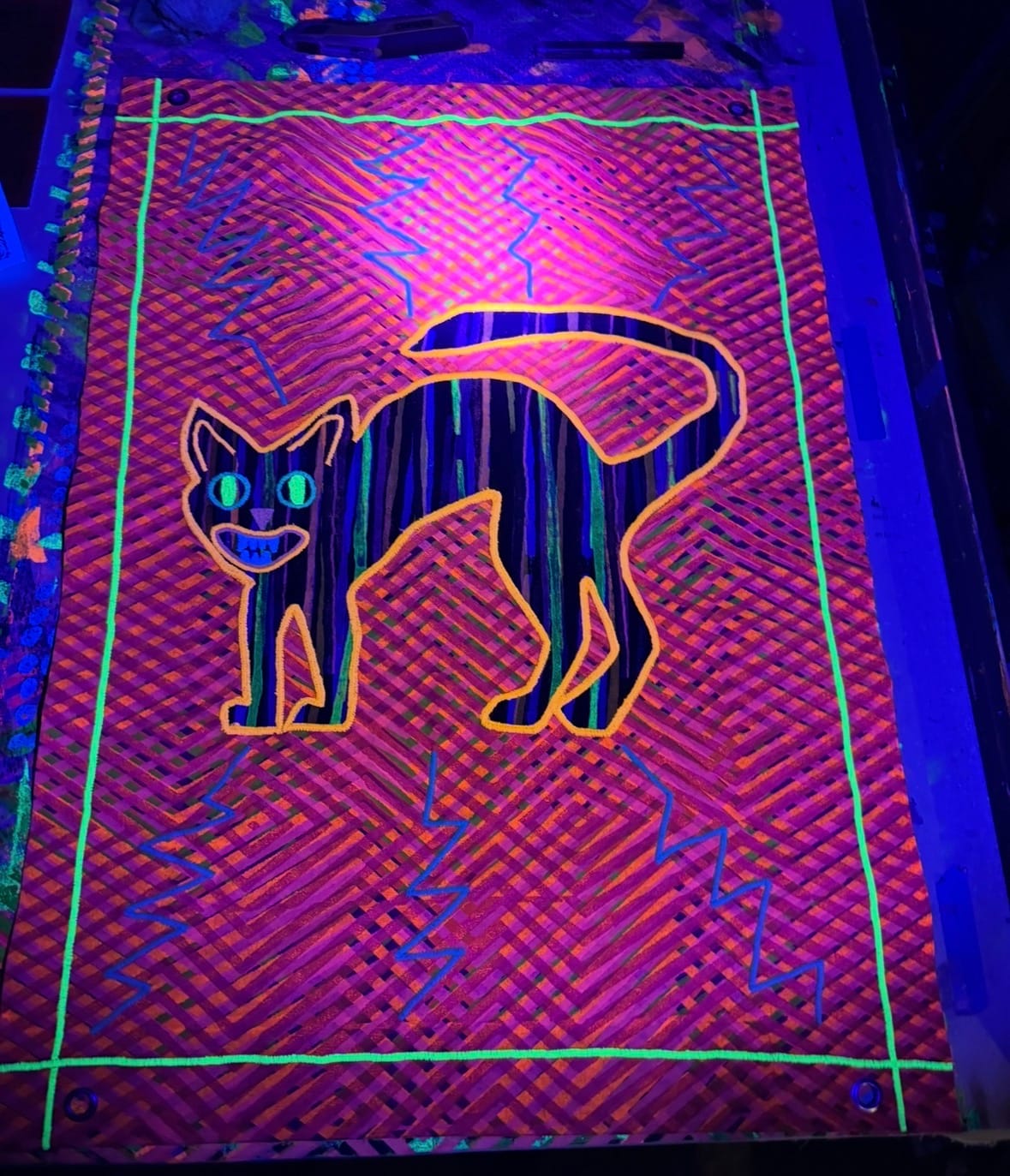
I make screen-printed textile art, and then I fabricate it into clothing, plushies and masks. I also make embroidered tapestries, as well as patches.
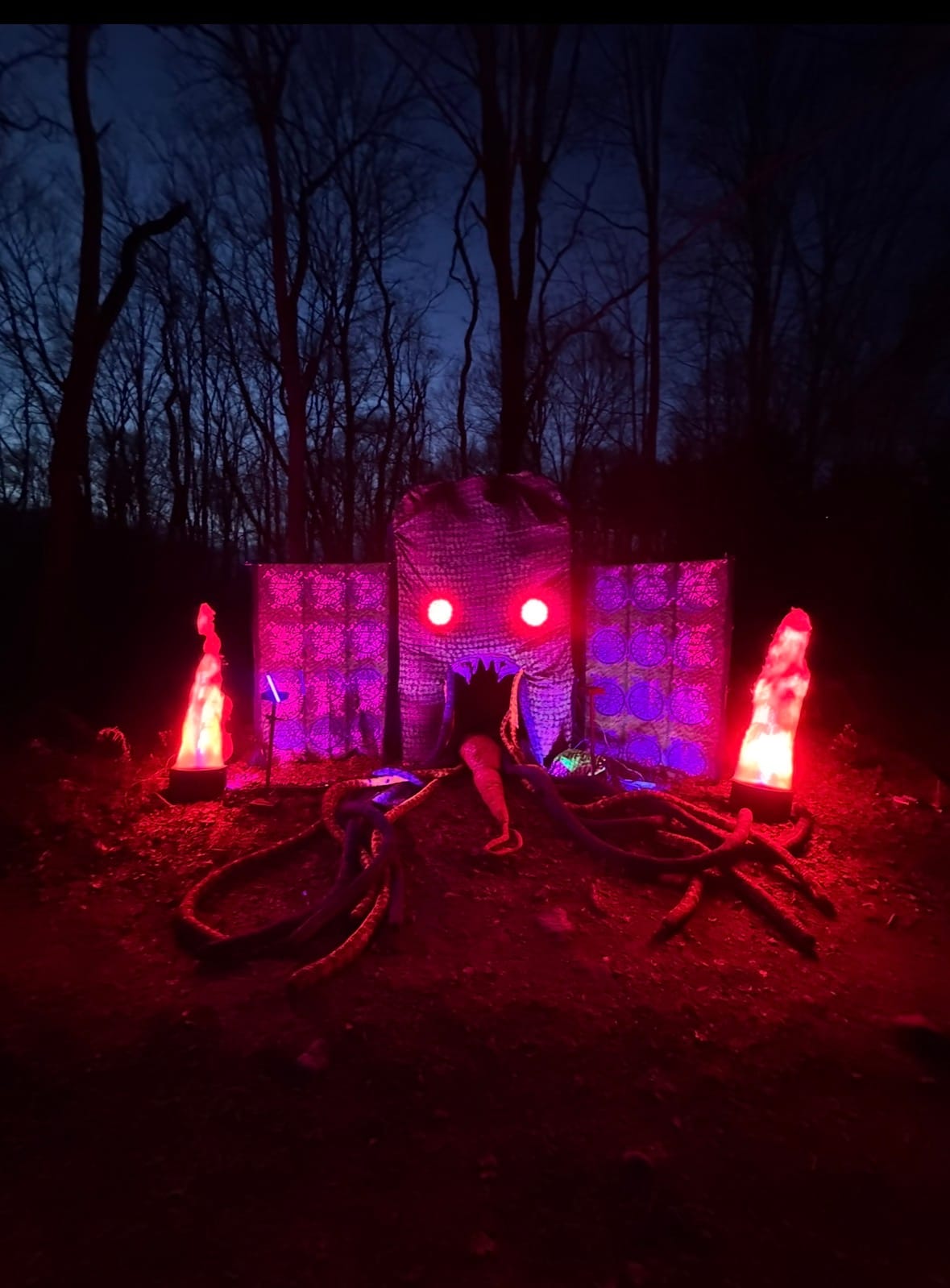
I also make installation pieces. Right now I have one I work with, which is a performance art piece. I feed people to a giant monster. It’s kind of like a ritual sacrifice: there’s this giant maw you climb into, and I’m dressed in a costume.
How did you become interested in this work?
I remember being maybe eight or nine years old, and my uncle, who went to school for painting, explained screen printing to me. I just became fascinated with it. I first tried it out in junior high. Then, in high school, I got into shop classes, but there were too many students, so I was pushed into a printmaking class. That sent me on the path, and I’ve been doing it ever since.
I have no real formal training. Some of it I learned in high school, and everything else I learned from friends or by trial and error, so I’d say I’m fairly self-taught.
Sewing was something I always enjoyed. My grandmother sewed a lot, and I remember watching her as a kid and being interested in sewing machines. I didn’t really get into machine sewing until I was 20 or 21. I broke a lot of machines learning how to sew.
What did starting your business actually entail?
I started about 20 years ago. I toured with a lot of bands, and I’d bring stuff I made, like printed shirts or little plushy guys, and sell them for $15 or $20 just to eke along on the road.
Around 2004 or 2005, I started really taking it seriously. Before that, I was just dabbling. Then a friend told me I should pursue it, so I took their advice and went with it from there.
I’ve always been in Providence. I went to Rhode Island College for film studies and started renting a studio space in the neighborhood I’m in now. I got really wrapped up in throwing DIY shows and punk shows, and at some point I dropped out of college.
In the 2000s, I was playing around and seeing what I liked and what worked. How what I made made me feel really plays into it. If I’m not feeling it, I’m not going to do it.
Where do your customers come from?
My first customers came from touring. Now it’s a combination of social media, craft sales and commission pieces. Maybe once a year, I go on the road with the band Lightning Bolt and sell a bunch of stuff that way. All the little bits and pieces add up so that I can eke by.
I haven’t had any gallery shows in a while. I should probably focus on that next.
Where do you find inspiration for your work?
Other artists I’ve known, toys and a lot of childhood stuff. My color selection definitely comes from toys I had as a kid. I tend to like bright oranges with that medium-to-dark blue, and I realized it comes from a Star Wars character.
I choose my colors by how they make me feel. I’ll print something and think, "This looks good," and then replicate it a lot until I get it out of my system.
What I make extends from childhood, too. I was the typical kid obsessed with monsters, and I’m still making monsters today. I love sci-fi, but my inspiration is more fantasy-based: monsters, weird creatures, D&D. I pull a lot from Lovecraft and horror and from psychedelia — its color patterns and how they interact with UV and other light sources.
How has your community shaped your business?
I definitely have a community that supports my work. People are excited about what I make and always interested in what I’m doing next. I’m not making as many hoodies anymore, and a few people have asked if I’m making more, so now I’m thinking maybe I should make another batch.
Social media has changed. I don’t feel like I get the same response I used to. They’re trying to turn everything into a paywall so you have to pay them for people to see you. But I lived in a time before all this existed. Those cultures, subcultures and spaces still exist in some form. I just need to rediscover them without having to use social media to reach people.
When I do my performance art, I always get a grand response from the people who see it. I think I need to get back to the roots of meeting people and showing my art in person. Something gets lost in translation with social media. I really struggle to get a photo on my phone to look like what I see in front of me.
In person is more work, but I feel like the satisfaction is higher because you’re building one-on-one relationships with people. It’s definitely exhausting, though.
How do you decide which craft sales to do?
Mostly, I ask myself: Would I go to this if I weren’t vending? One I did recently was at North Burial Ground, a cemetery where they have a little music festival with bands playing. I’d always wanted to check it out, but every year I’d forget. Then it came across in an email invite that didn’t get lost in the deluge, and I applied and got in. Some I’ve done because friends said, “I think you’ll do really well at this.”
It comes down to: Am I going to have fun at this? Am I going to enjoy it? If not, I probably shouldn’t do it.
where you’re sellingWhat’s something about running a creative business you wish more people understood?
Running your own business and being your own everything is a lot of unseen work. A lot of people see that you have to make all the stuff, but then you have to chase down where you’re selling, and some applications want a whole bio and answers to a bunch of questions.
Social media is a big job, and honestly, I hate doing it. Instead of just making my stuff, I’m supposed to make these reels to generate viewership, and it ends up feeling like a job instead of fun. It feels more like making a commercial.
I like to be intentional in what I’m saying and doing, and to come from a place of honesty. If I’m posting a video I made, it’s because I actually care about it, not because it’s obligatory.
What’s the most useful piece of advice you’d give to someone just starting their creative business?
If you love doing it, do it. Don’t let anybody stop you. When I first started, I wasn’t thinking about making money. I was doing it because I enjoyed it, and that came out in my work. People can see if you’re not enjoying making your art.
Don’t worry about how good it is. Make things for yourself first and everyone else second, and that comes through eventually. Do what you love, and do it honestly.
How has your disability shaped your creative work?
I’m pretty open about it at this point. When I was a kid, I didn’t like talking about it because I didn’t want to get singled out. But I feel like there’s a sway happening where we’re trying to silence the disabled community and people with chronic illnesses, which is a sign for us to be more vocal about what we have to go through. If you don’t tell people how you feel, they’re not going to know.
With congenital adrenal hypoplasia, if I get injured, sick or too stressed out, my body doesn’t make enough cortisol to respond. And stress is anything your body experiences, good or bad. As a kid, I had an adrenal crisis from too much fun at a party. I can get terribly sick and go to the ER, and then I have to recoup from the fatigue afterward.
With the ADHD, looking back, in my 20s and 30s I’d get on a tear making something, and that’s what I would do for an entire day or several days. Extreme hyperfocus. I still get it, but I’ve learned you either work through it and pay more later, or pay a little bit now.
Burnout is a big one. At the beginning of September, I burned out really bad. I did three shows over the summer and a couple of performances while working for somebody to make side cash. I’m realizing I was probably burned out every December after my last holiday sale, too, and I just needed to reset. As I get older, the rebound time is longer. It used to be a few days. Now it’s sometimes a couple of weeks.
I still have a habit of acting like a lot of these things don’t bother me. In private, I’m honest about how I’m feeling, and in public, I play the part of not having a problem. But the older I get, the more I’m like, what is this doing for anybody? Sometimes just saying, “I’m not feeling good,” is enough.
A big stressor is putting all that energy and time into your creative work and not always making an immediate income off of it. So after busting your butt, you have to pick up a job when you’re already burned out and exhausted.
A lot of the rest of the world has subsidies for artists. The United States is so dependent on creatives in our culture but doesn’t expect them to get any assistance, while we give massive assistance to multibillion-dollar corporations.
A lot of creative people I know are already dealing with chronic illness, neurodivergence or poverty. Most of the ones doing it under those circumstances are doing it because it’s compulsory. I love what I do, and giving it up would hurt. Money or not, I’m still going to do what I do.
What brings you joy outside of your work?
Seeing my friends. I don’t hang out with them enough, but it’s important to me, and a lot of my friends are creative, so I love going out to see whatever they’re doing. I love to dance.
I come across as a very social person, but I definitely like my alone time, and I’m happiest just making my art. In a perfect world, I’d have more of a creative work-life balance.
Thanks, Michael! You can learn more about his work at mikeknives.Etsy.com.
Editor’s note: This interview has been edited for length and clarity.
This article is part of a series, Artisan Joy: Empowered by Craft, which celebrates Rhode Island makers with disabilities who earn all or part of their income from their art or craft. Funding provided in part by a grant from the Rhode Island State Council on the Arts, through an appropriation by the Rhode Island General Assembly, a grant from the National Endowment for the Arts and private funders.