Designer Kim O’Brien Turns Fallen Leaves Into Silver

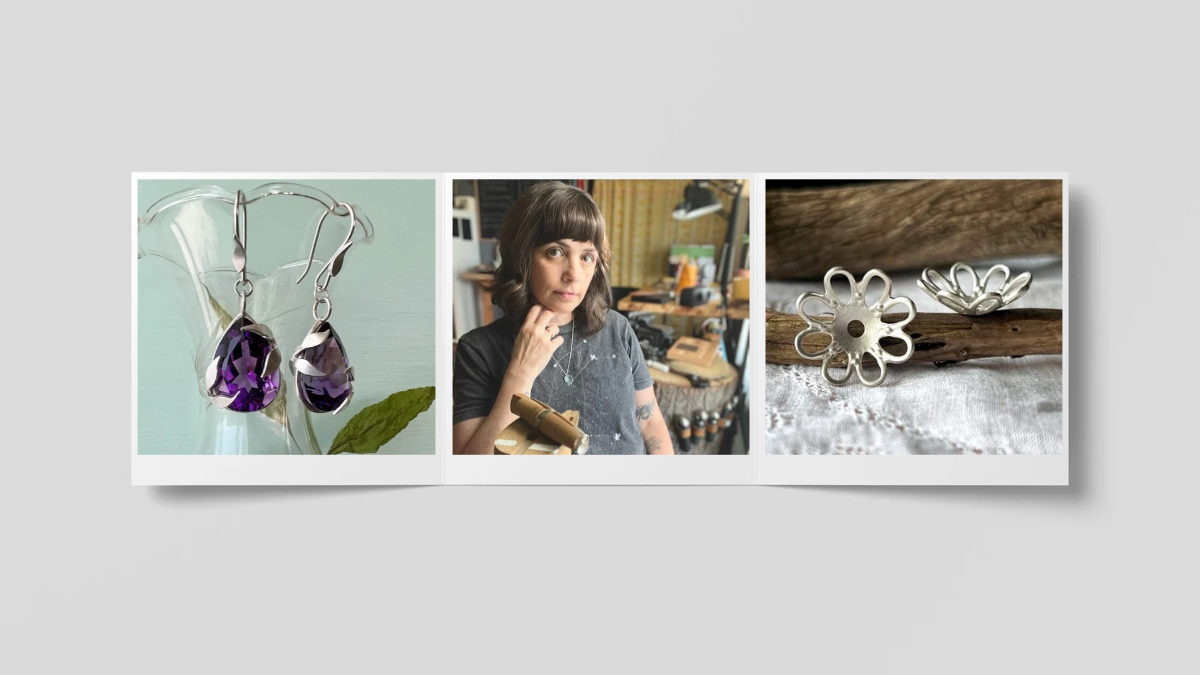
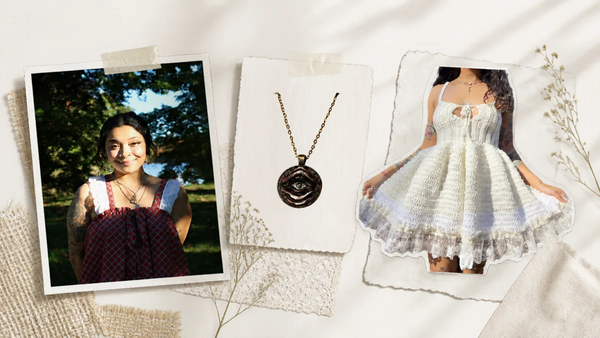
WARREN, R.I. – Meet Kim O’Brien, the metalsmith behind Iris Noire Designs. In her interview, Kim shares what inspires her jewelry, how her health shapes her work and her advice for artisans ready to sell what they make.
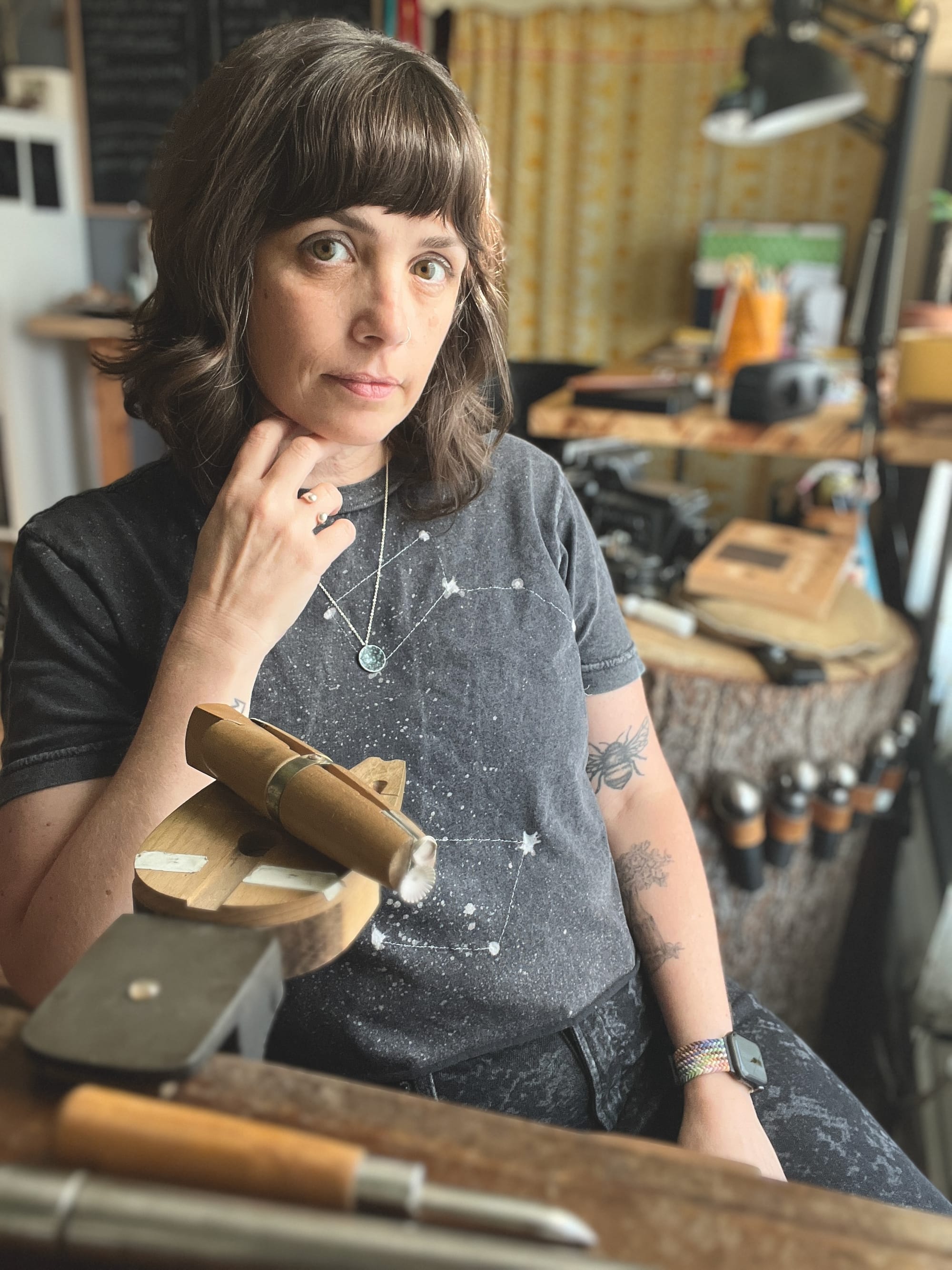
Tell us about your work.
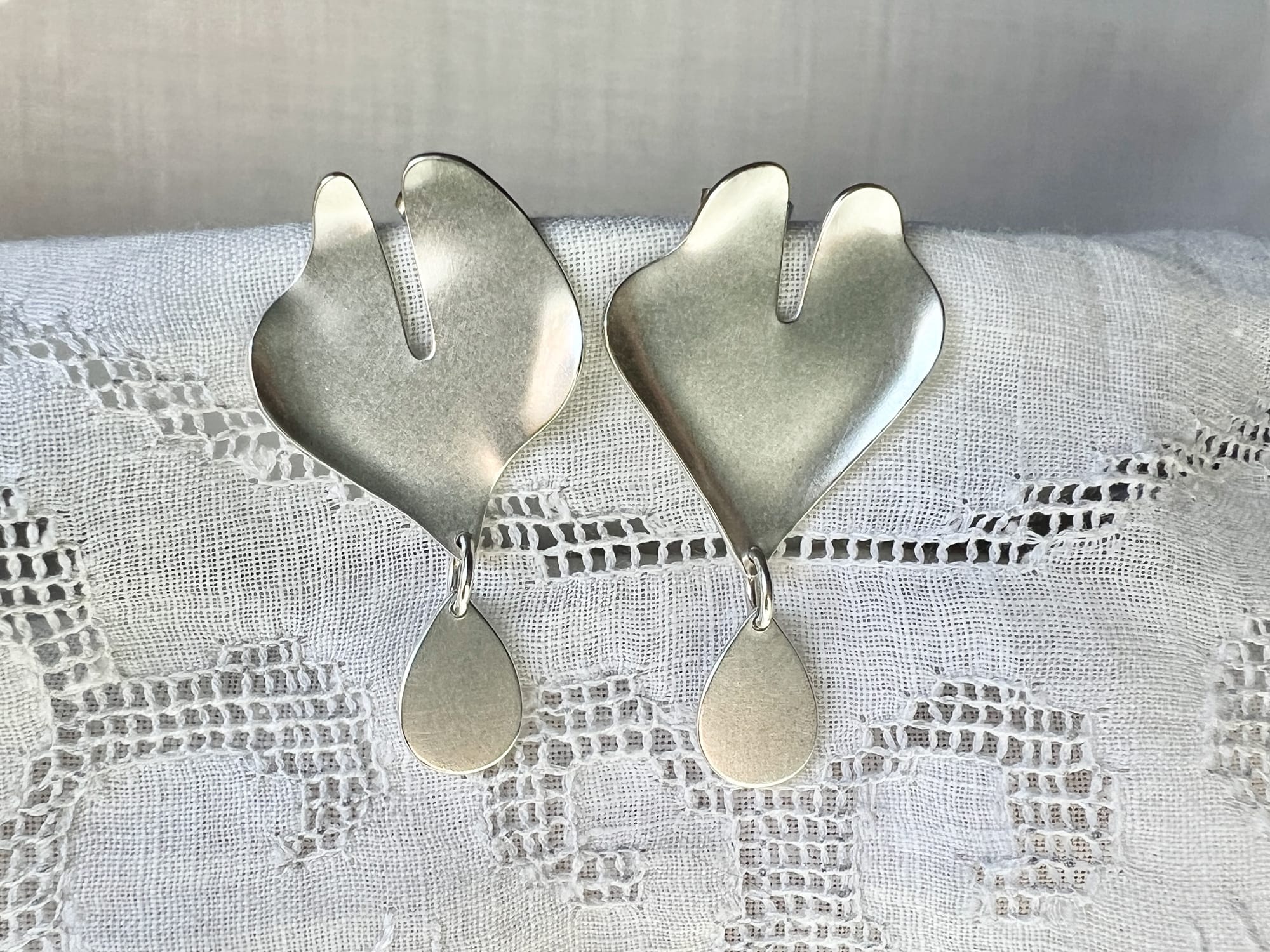
My process has always been inspired by nature. While getting my BFA at UMass Dartmouth, I worked at a florist where I was able to study the construction of flowers, shapes of petals, how leaves attached to stems and which flowers complemented each other. I saw flowers through their life stages: buds, bloom and decay.
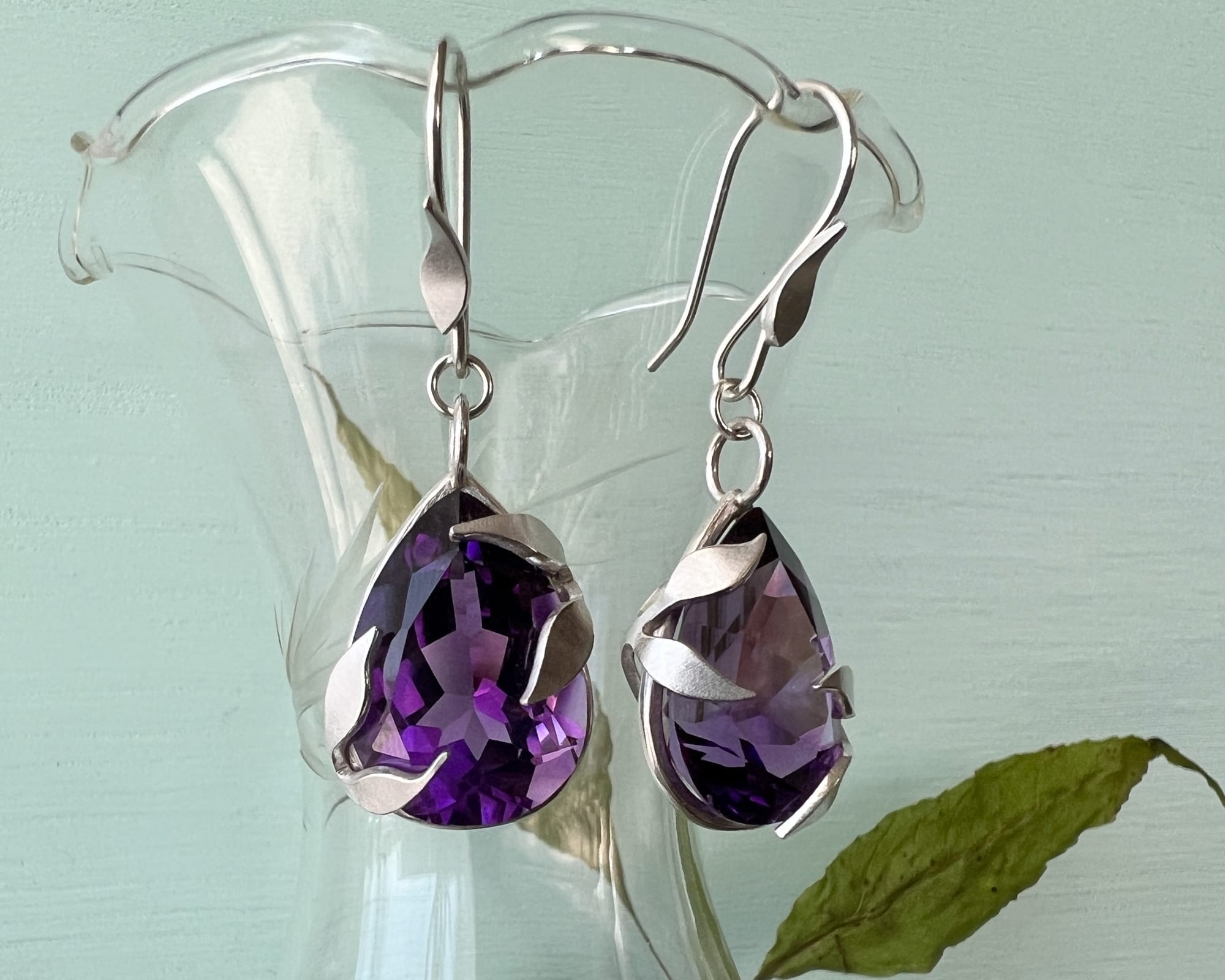
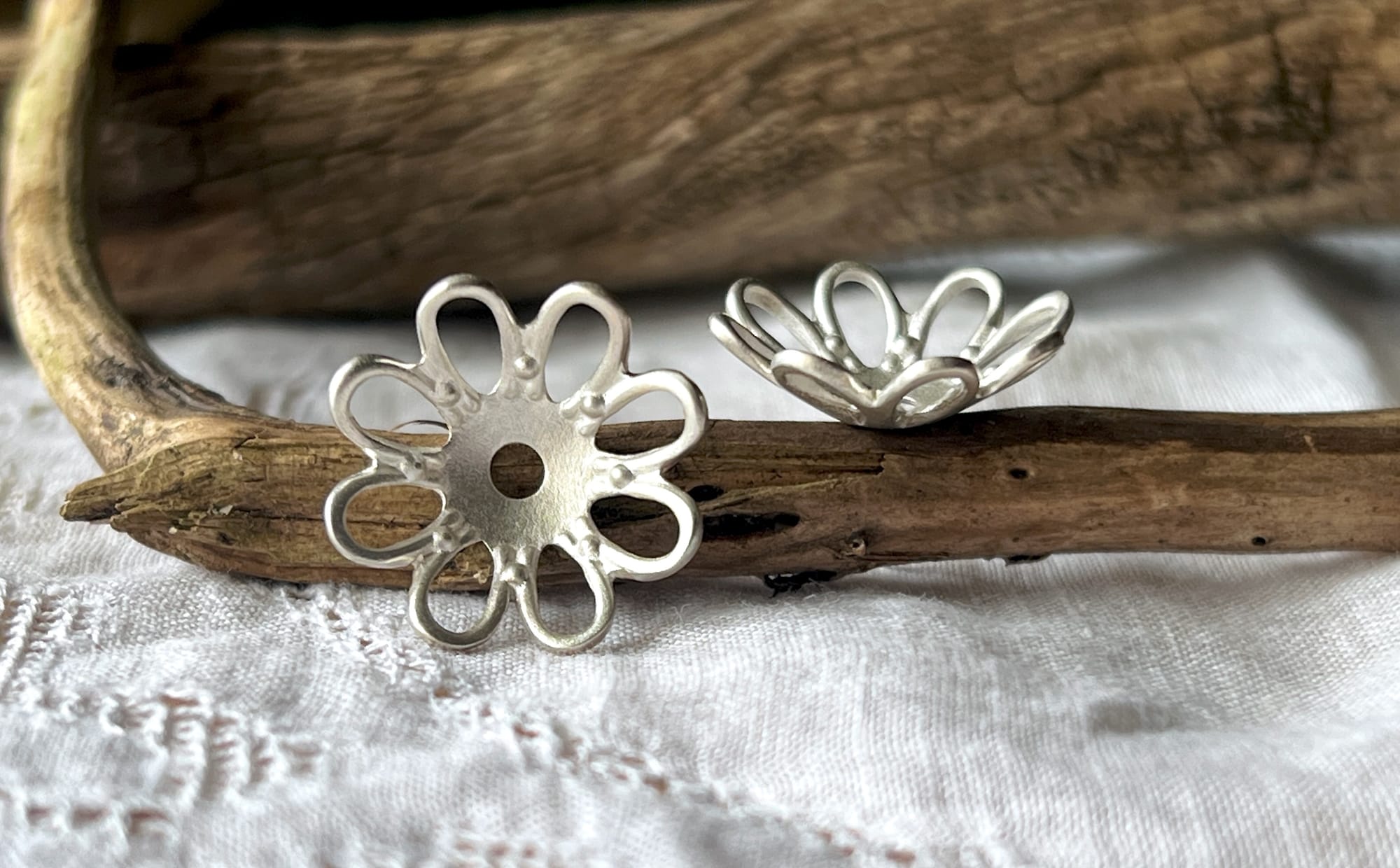
When I left the florist to work on my jewelry, I started forming metal to resemble flower buds; I hammered textures into sheets of silver to replicate what I observed on petals and leaves and found enamels to capture the colors of the palette I used to design bouquets.
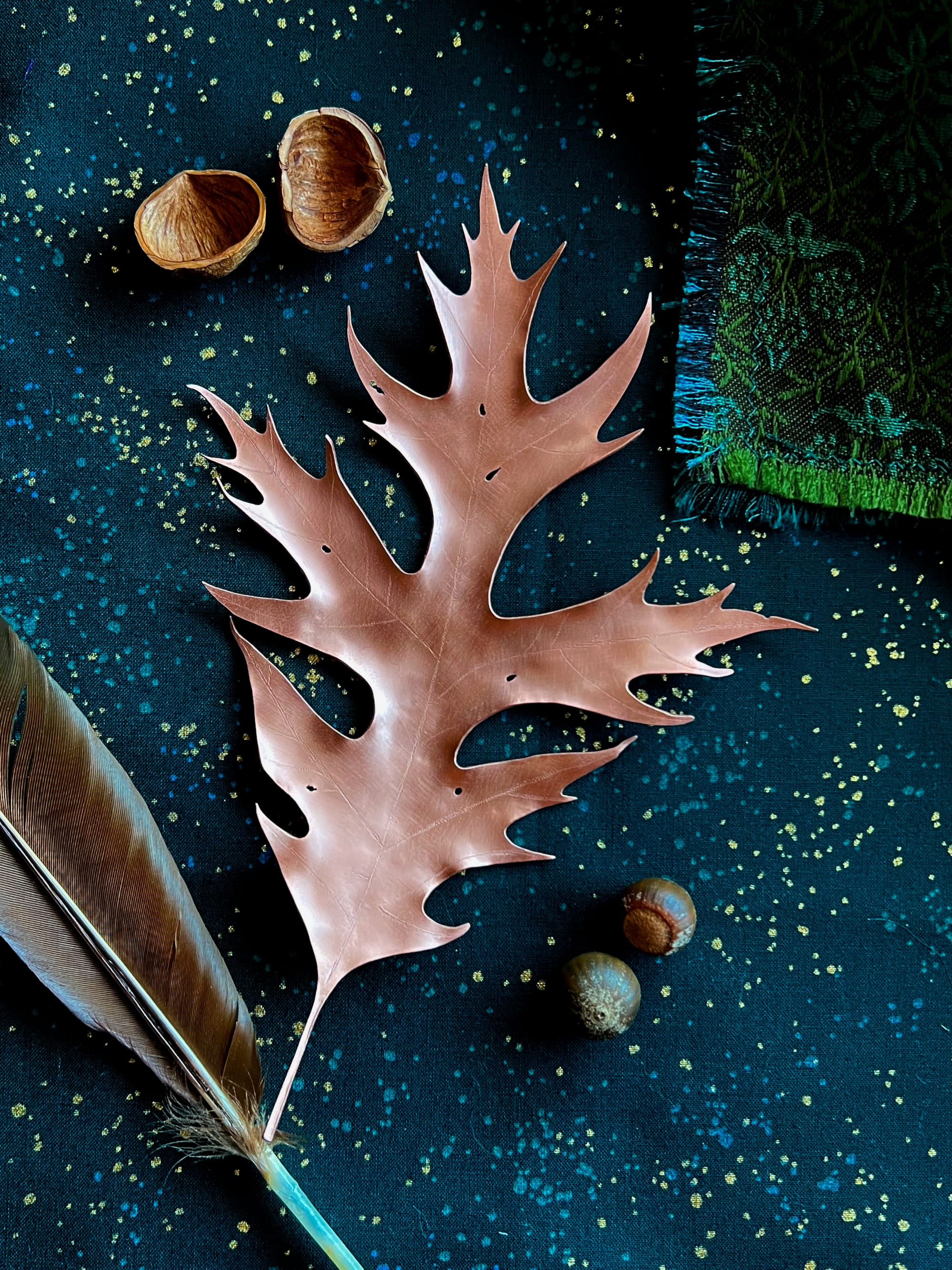
That was over 20 years ago. Sadly, I can no longer work at a florist due to the unpredictability of my health, so I go for walks and bring home dried flower pods, fallen autumn leaves, twigs, acorns, feathers, samaras and bits of lichen with the intent of recreating these bits of nature in metal, accented with stones and enamels.
How did you become interested in this work?
Finding my focus in art school was a struggle. I was enchanted with weaving, pottery and nature drawing while focusing on art education for a few years. I kept getting pulled back to the metals class I took by accident. I transferred from the University of Rhode Island (URI) to UMass Dartmouth mid-year and couldn't find an art advisor during winter break, so another professor signed off on my classes. This got me into jewelry and metals without ever taking an intro class. Despite it being overwhelming, I learned so many techniques my first semester. I realized the importance of using the right hammer. I came to like sawing through metal with saw blades I could barely see; when we got to soldering and annealing, I was completely smitten.
Working on a floor loom was fun, but the seemingly endless tools used in metalwork were something I knew I needed to learn more about. Due to scheduling and work conflicts, I didn't get back to metals for a couple of years. By the second class, I added jewelry and metals as a double major, then dropped art education to focus all my attention on jewelry making.
What did starting your business actually entail?
At first, I had little confidence in my work, and I was unprepared for people trying to barter with me like they would at a flea market. My prices were already very low for the labor I put into my pieces, and it all felt somewhat hopeless. After talking to other artists, I learned of some better fairs to apply to and got into most of them. It was the boost I needed to get out of the basement studio I worked in to sharing my first rented space with my soap-making friend.
Sourcing materials wasn't really a struggle since we had to buy our own metal and stones in school; the difficult part was reeling in how much I ordered and knowing what customers liked as far as types of stones and colors. As far as midnight oil goes, I have never known another way, which I just found out is a trait of having ADHD. Making art in the silence of night has always been my passion.
Where did your first customers come from?
Craft fairs! I started selling my work under a tent, and customers were enthusiastic, despite the sales being slow. After gaining some confidence, I applied to Craftland, a shop in Providence, R.I. The year I decided to apply was the year they went year-round; prior to that, they were a yearly holiday pop-up. I had so much fun shopping amongst the glitter in years past, I knew I had to apply once I finally started my business.
I got in first try and even worked there for a holiday season. I met so many people, makers and customers. Everyone was really lovely and encouraging. When a customer wanted to see my work in a case, the staff would get me off the floor so I could explain my process. It was easily the most rewarding experience I had when I started out. As someone who perpetually doubts herself, it gave me some much-needed momentum to expand my collections.
How have your community and values shaped your business?
I made a collection a few years ago where a percentage of the sales are donated to The Brigid Alliance to support people with uteruses who don't have access to safe abortions. A few pieces are still live, and when random sales from my Sanctuary Collection trickle in, I am delighted to send another donation their way. The Brigid Alliance tracked the link to their organization on my site; they reached out to thank me well before I had made a sale. In making this collection, I realized community isn't always restricted to a nearby zip code. Having customers across the country supporting folks they will never meet feels as close-knit as our tiny state.
How has your disability shaped your creative work?
Some days my mind is thrown into the past, and walking into my studio and feeling the cool face of a hammer or a smooth sheet of silver can help bring me back to the present. Some days I am in pain and unable to get into my little space. It's when the days of pain trickle into weeks or months that really wear on me. I miss my tools deeply in those times. A couple of years ago, I put my business on pause and stopped doing production work. While it was a tough decision for me to make, it has let me focus on the work I've always wanted to make. Pieces that take time, thought, lots of planning and the days I can't hear metal banging on metal, I can consider what the next piece could be. I can usually get some books out to research or get inspired. In this answer, it seems I have started widening my definition of work to include research and time to be inspired. My ideas of work are constantly redefined, which is honestly for the best.
Editor's Note: Kim lives with Complex Post-Traumatic Stress Disorder (CPTSD) and fibromyalgia, a condition that causes widespread pain, muscle stiffness, sleep problems, fatigue, depression and anxiety.
What are you working on now?
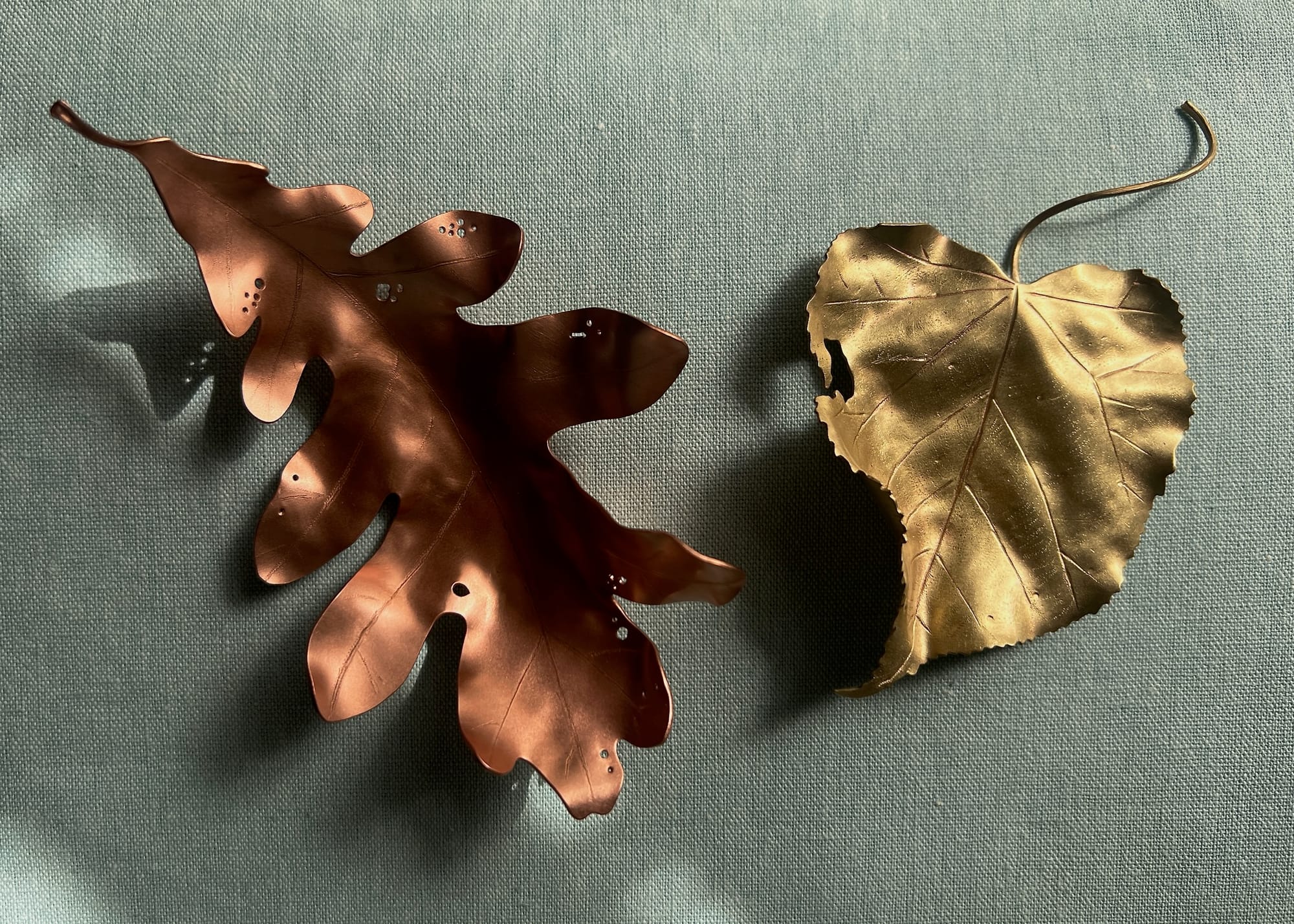
I've been reading about women and goddesses from Greek myths and legends and making pieces to honor them. After an existence of being dismissed, abused, neglected and manipulated, I feel like these women are deserving of gifts. While this story includes a man, I started with Philemon and Baucis. The gods visited them, and they greeted them with hospitality, unlike the rest of their village. After feasting on a meager meal, they were asked to follow the gods away from their village. They did as asked and watched the entire village get flooded. As a reward, they were given a temple to look over and a wish granted. They both wished to not live without the other. At his death, Philemon turned to an oak tree and Baucis to a Linden. Side by side, roots entwined, branches touching, they live on together, eternally. While this was meant to be a lesson in hospitality, I saw a love story. I made an oak leaf altar piece for Philemon out of copper and a Linden leaf altar piece for Baucis out of bronze. I wanted them to have different metals to represent what they each brought to their relationship. Then I made each a ring to represent their love for each other. The rings are inspired by the seeds their trees produce to show how their love lives on, eternally.
What's something about running a creative business you wish more people understood?
It is equally fulfilling and exhausting. As a one-person show, every last thing is up to me, including designs and making sure I have enough earring posts and packing tape.
What's the most useful piece of advice you'd give to someone just starting their creative business?
Price your worth! Your time is so precious, and you deserve compensation for it. Craft fairs are rarely worth your time for exposure. I have had few occasions where the follow-up sales post-show were worth the effort of getting myself, my tent and my work to a show, but that is a huge exception. If it doesn't feel right, don't second-guess yourself. Learn to say no and pass on things that don't work for you. Deep down, you know what you deserve; you know how you want to be perceived and trust that you know. Artists are vital to our culture and should be compensated as such.
What brings you joy outside of your work?
I love going for walks, watching WNBA, weaving on my Hello Loom, knitting, sewing, drawing and baking. My husband and I enjoy visiting museums with our portable watercolor sets. We just got a basketball, and I've been looking for courts to shoot in while I am out running errands. We have a nine-year-old pup who is quite sweet and more outgoing than her humans. She is always trying to make friends with animals and bugs we see while out walking. Our cat is also quite enchanting and as weird as we are. As I type this, my husband is fiddling with my guitar that I have been learning to play, which reminds me of the punk band I hope to start one day.
Thanks, Kim! You can learn more about her work at https://irisnoiredesigns.square.site.
Editor’s note: This interview has been edited for length and clarity.
📖 Enjoyed this story? Artisan Joy is a nonprofit magazine celebrating the stories behind the craft. Click here to join us for free, and we’ll send you our 3 most popular articles.