How Heather Bearden of Specimen Press Gives Public Domain Art Another Life

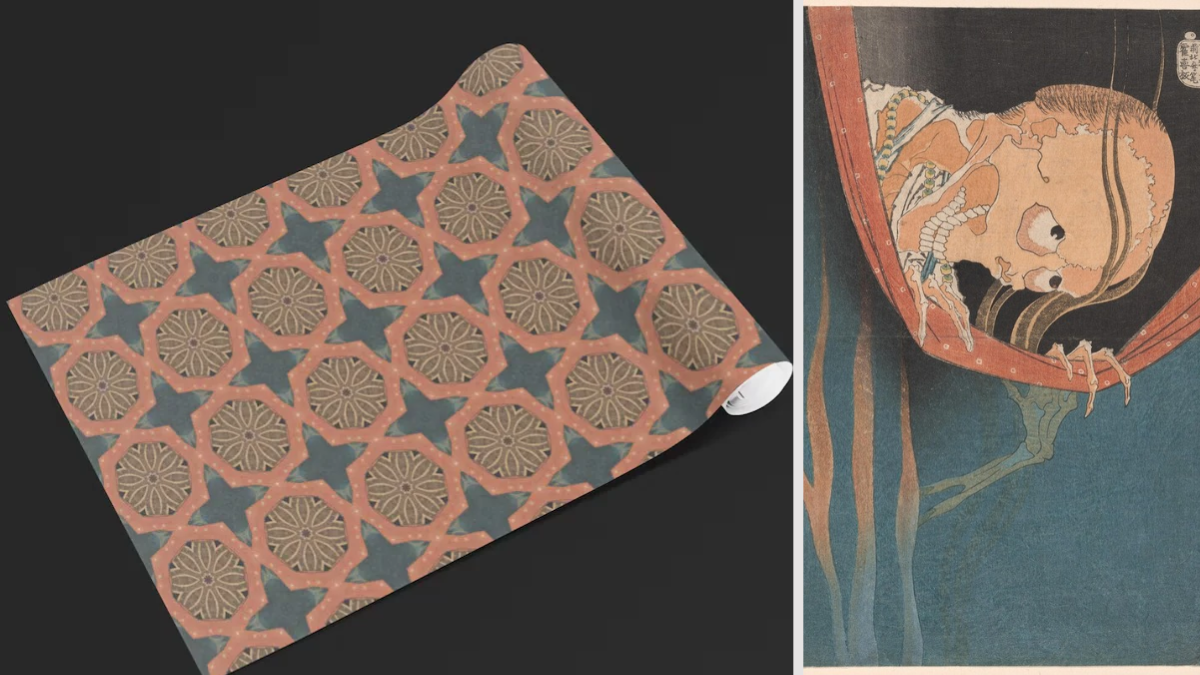
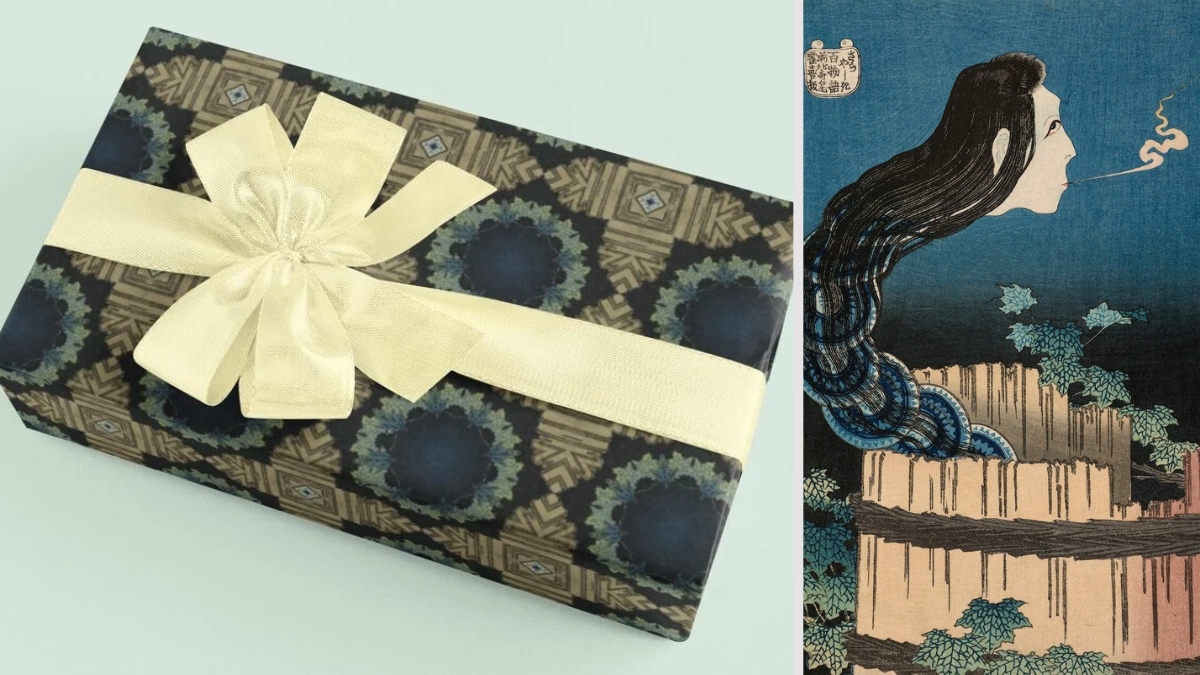
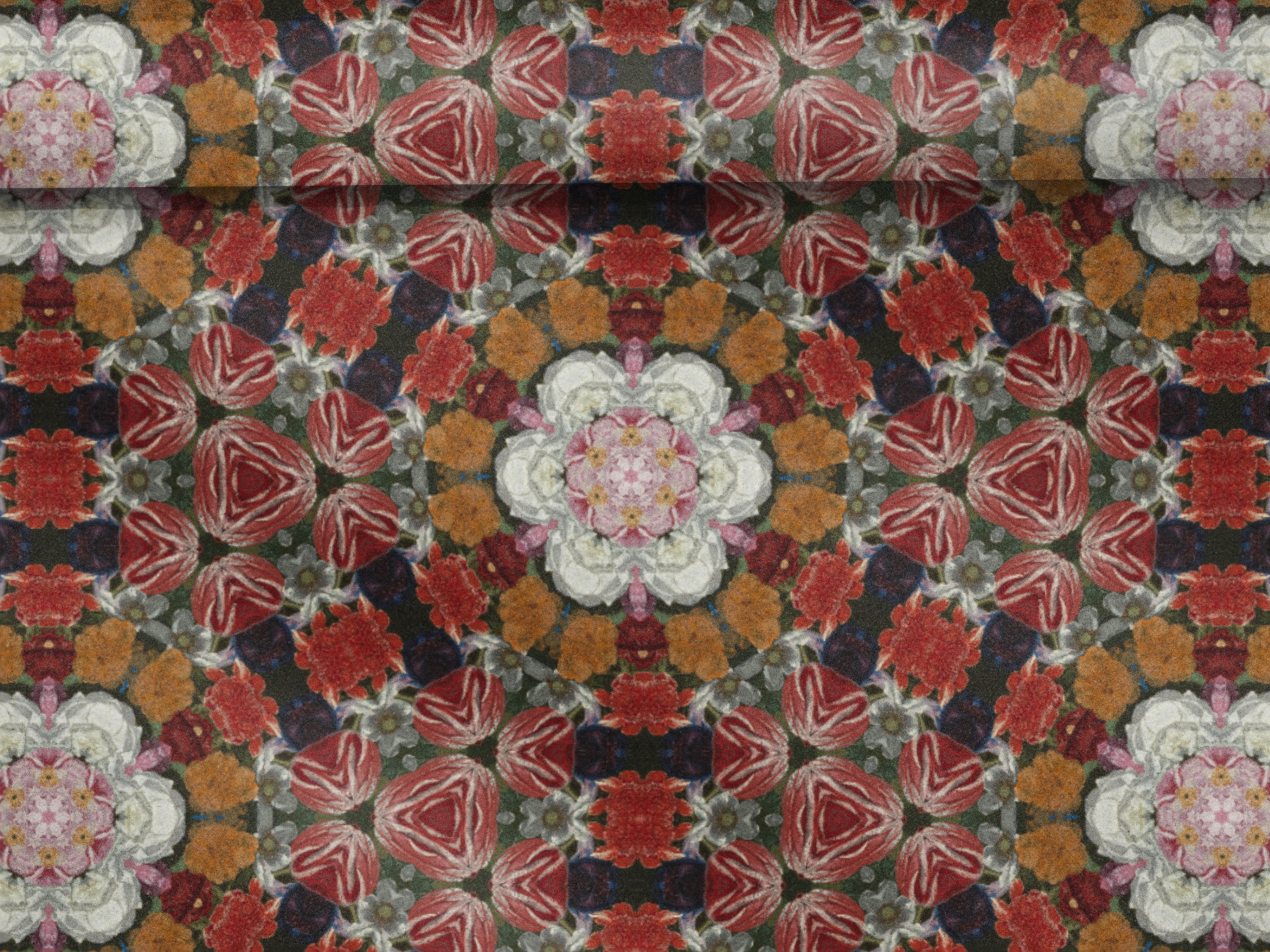
NEW YORK – Heather Bearden wraps gifts in museum masterpieces. As the founder of Specimen Press, the artisan designs wrapping paper from public domain art. Each design starts with a single artwork, like a Dutch still life or a Hokusai ghost print, which Bearden turns into a repeating pattern using crystallographic symmetry.
We talked with Heather about the gift-wrapping mishap that started it all, why checking for accidental faces is part of the job and the Hokusai-inspired collection they’re most excited about this Halloween.
Tell us about your work and what makes it distinctive.
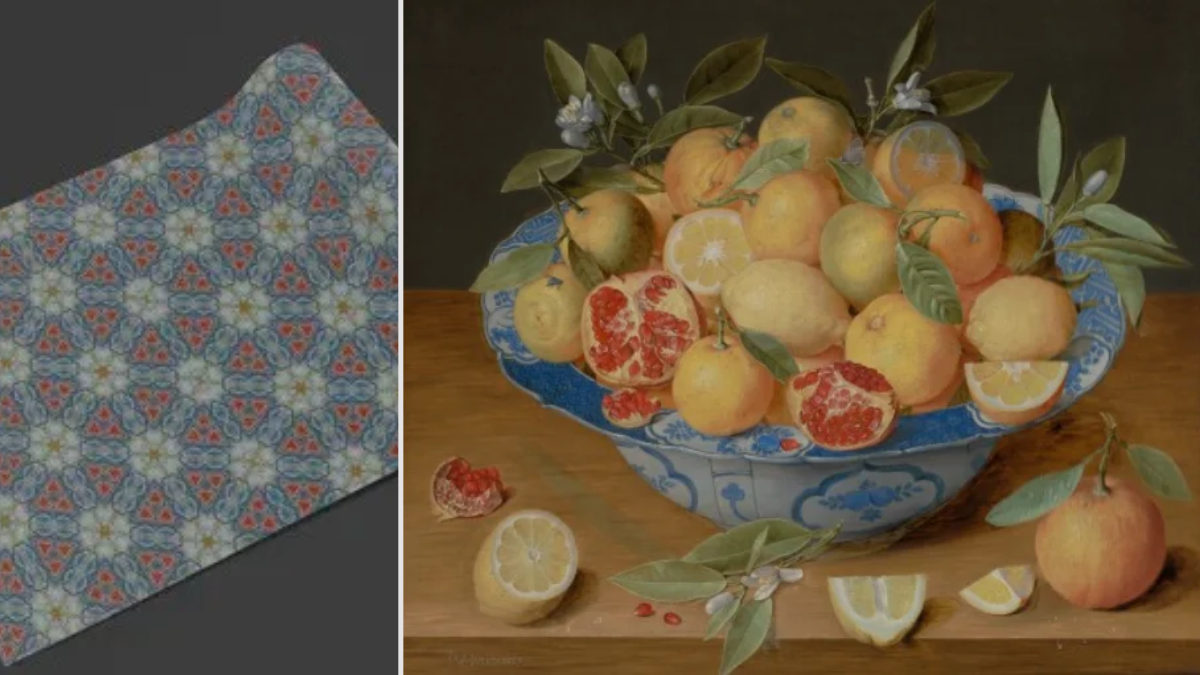
I make wrapping paper from public domain museum art, mostly from the Rijksmuseum, the Met, and the Art Institute of Chicago. I take a single artwork, like a Dutch still life, a Hokusai ghost print, or a 19th-century mushroom illustration, and rebuild it with the mathematics of crystallographic symmetry. These are the same 17 “wallpaper groups” that describe tilework and crystal structures. The result is a seamless repeating pattern that reads as pure ornament from a distance. Up close, you start to see a pomegranate, a moth, or a ghost’s face folded into the geometry. Each sheet is printed to order on satin paper, so nothing sits in a warehouse. Our tagline is “patterns with provenance”: every design can be traced back to a specific painting in a specific collection.
How did you come to this work, and when did it shift from something you did for fun into a business?
I once turned wrapping paper inside-out to try to make the gift look more special, and it ended up looking like butcher paper. For years I’ve searched for wrapping paper that makes gifts look as special as I want them to. My background is split between technical work and cultural research, and wrapping paper turned out to be where those meet. Once major museums began releasing high-resolution images into the public domain, I started experimenting with turning them into repeats. That was mostly for the pleasure of seeing what a Kalf still life becomes when you mirror it six ways. In spring 2026, I decided to take it seriously. I built a catalog, set up print-on-demand production, and opened Specimen Press on Etsy in time for the holiday season.
How does your work connect to a community, tradition, or set of values you care about?
Specimen Press exists because museums chose to give their collections back to the public. Open access is one of the best things cultural institutions have done, and I want to show what happens when people actually use that commons, rather than just browsing it. Every listing credits the original artist and collection, so a gift can also start a conversation about Hokusai or Dutch Golden Age painting. Printing on demand is a values choice too: there’s no overproduction and no unsold rolls going to landfill after December. I’m also designing for people who never saw themselves in standard holiday paper. That includes a Hanukkah line drawn from Judaica in the Met’s collection, and darker, stranger designs for people who’d rather wrap gifts in ghosts than snowmen.
What are you working on now, or what piece of work are you most excited about right now?
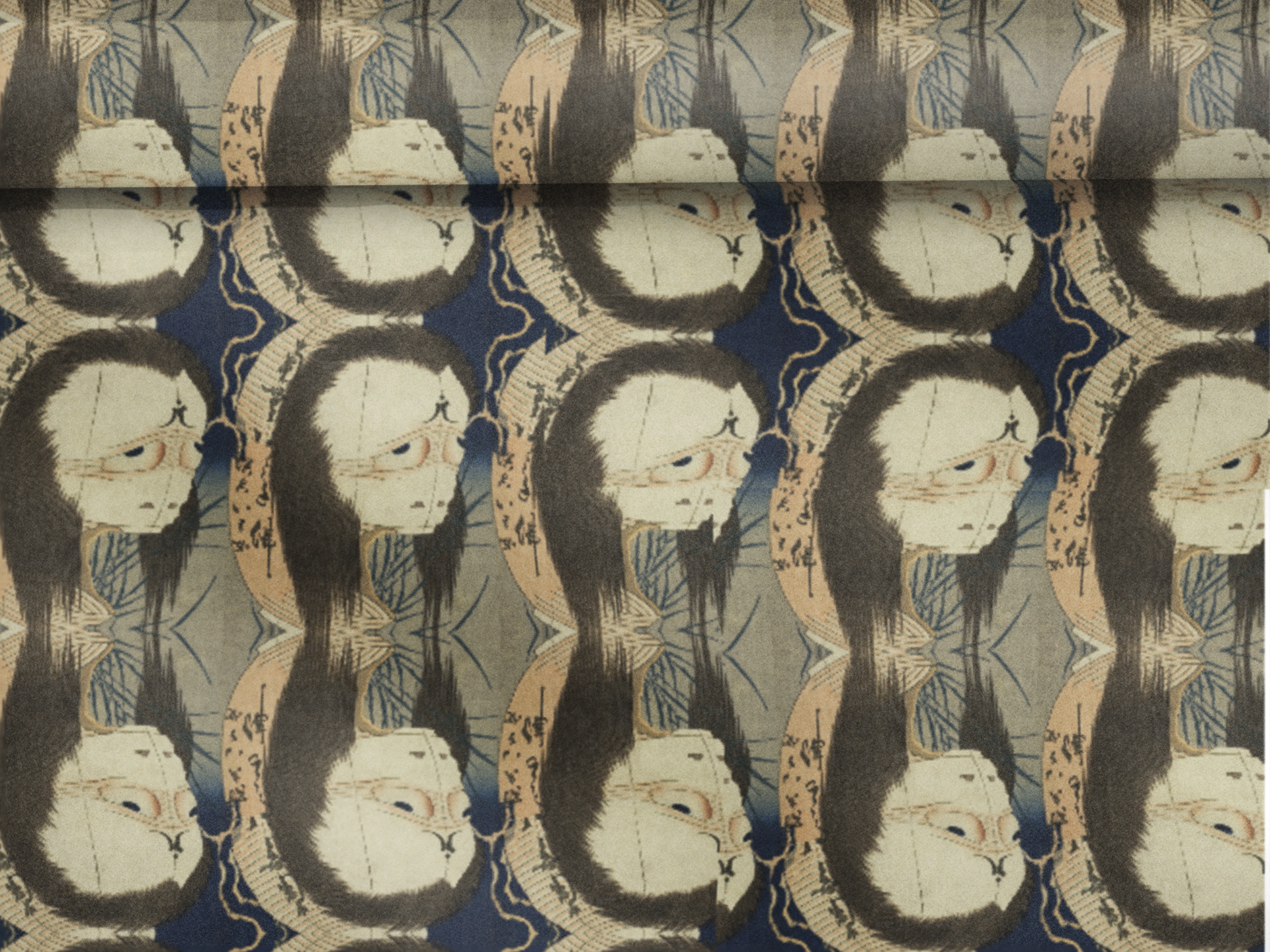
Right now I’m most excited about the Ghost Stories collection, built from Hokusai’s supernatural prints, including Okiku, the ghost who rises from a well to count plates. It’s our Halloween centerpiece, and it’s the clearest example of the “beautiful object with a secret” idea: a tidy, elegant repeat that turns out to be full of ghosts. Beyond that, I’m testing samples of our darkest, most detailed designs, like jewel-toned Dutch still lifes on black grounds, to make sure the print holds every line before they go live. I’m also finishing a small collection built from Willem Kalf’s paintings of silver and brocade.
What’s something about running a creative business you wish more people understood?
Making the thing is the smallest part. For every design that goes live, there’s rights research to confirm the source is truly public domain, test prints to make sure fine linework survives the printer and a surprising amount of time checking patterns for accidental faces or anatomy. When you mirror an image dozens of times, a pair of grapes can become something you absolutely cannot sell as holiday paper. Then there’s pricing, listings, photography, outreach and customer service. When people see a $35 set of wrapping paper, they’re seeing the tip of a lot of invisible work. The same is true for every independent maker whose prices seem high next to a big-box store.
What’s the most useful advice you’d give someone just starting their creative business?
Be ruthless with your own work, and test the physical product before you scale it. I cut far more designs than I keep, including ones I loved, because a strong small catalog beats a big uneven one. I also won’t list my darkest, most detailed designs until I’ve held a printed sample, because a screen will lie to you about how ink behaves on paper. Beyond that, let the business prove itself before you add to it. I’ve already shelved ideas like matching washi tape and fabric until the core product has earned them.
What brings you joy outside of your work?
Growing plants and learning how to keep difficult ones alive. Designing jewelry. Reading dark, beautifully drawn manga, which probably explains a few of my Halloween designs. Spending time with my cats. And being out in the city, whether that’s a gallery opening, a late night in the Lower East Side, or just walking around Chinatown.
Thanks, Heather! Shop Specimen Press at specimenpress.etsy.com.
Editor’s note: This interview has been edited for length and clarity.
📖 Enjoyed this story? Artisan Joy is a nonprofit magazine celebrating the stories behind the craft. Click here to join us for free, and we’ll send you our Curator’s Starter Pack featuring our 3 most popular articles.