Stylist Jill Marinelli Helps Women Feel Like Themselves Again

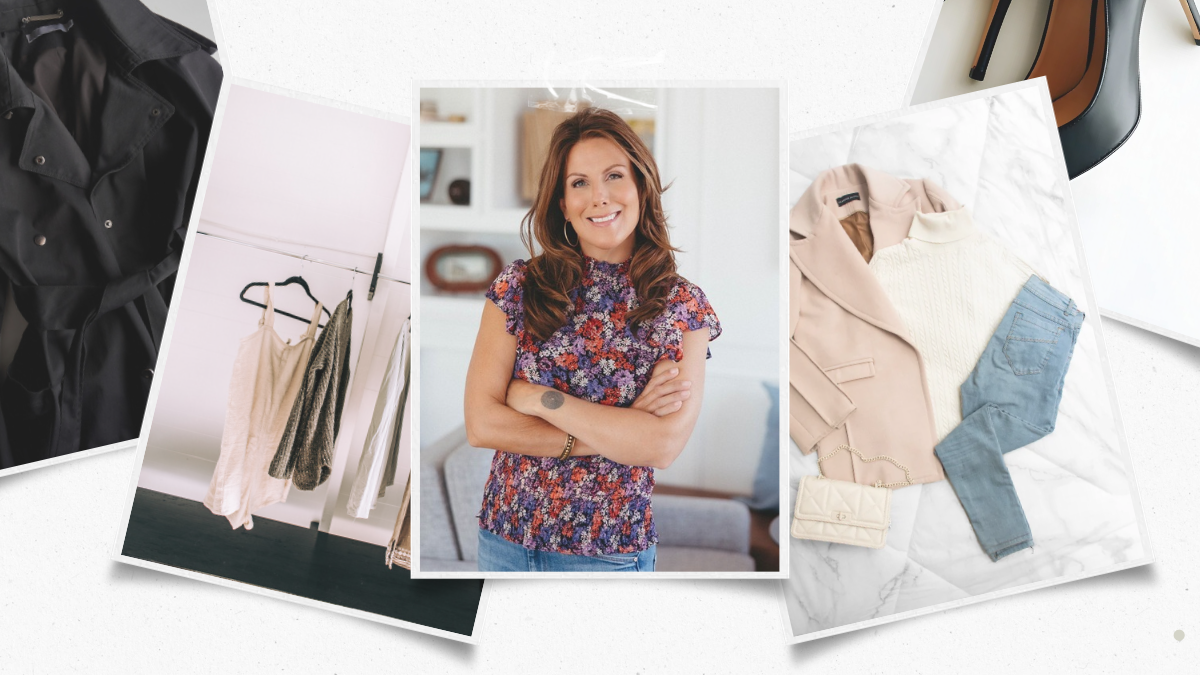
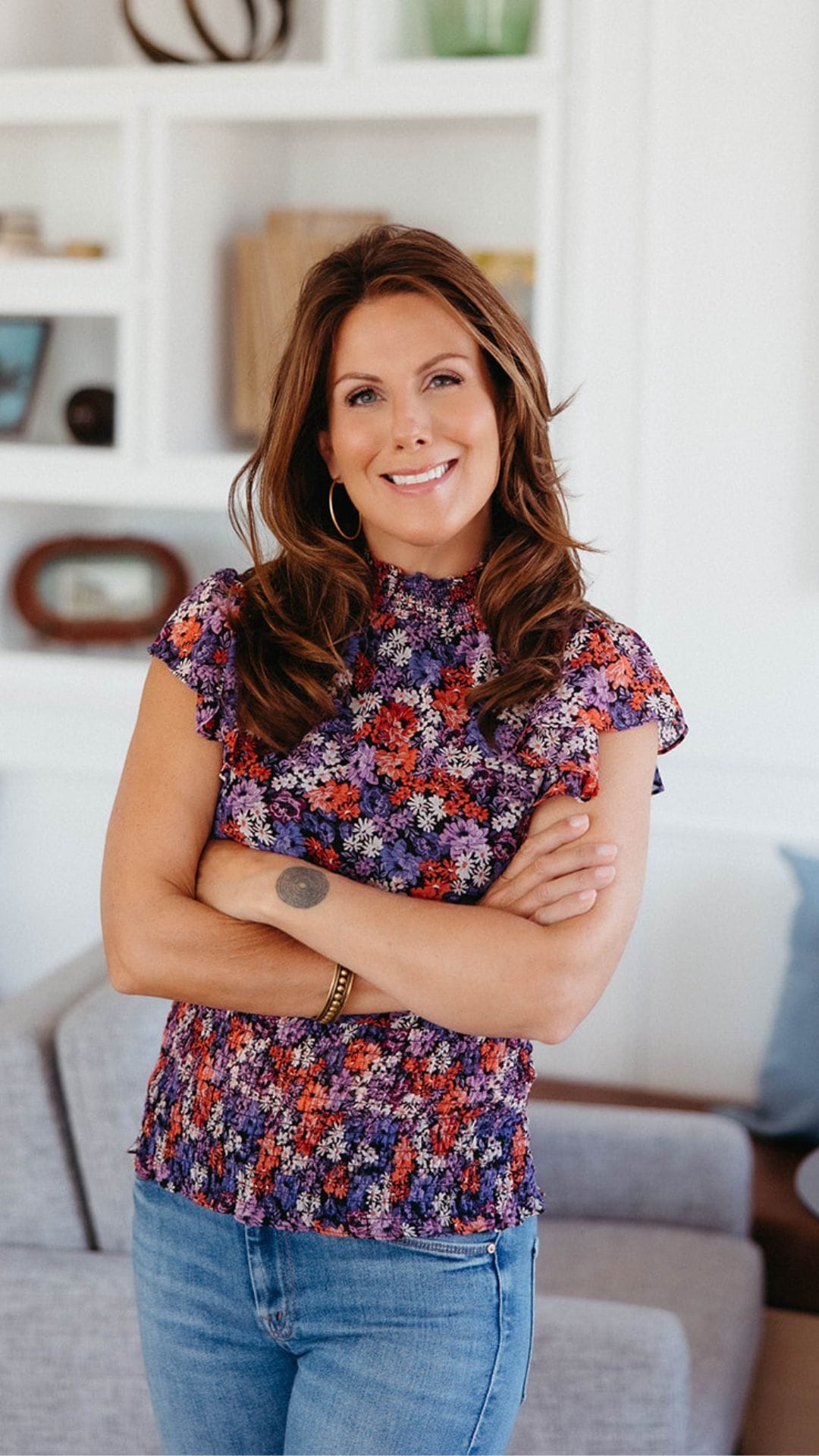
EAST GREENWICH, R.I. – Many women tell Jill Marinelli they dread getting invited to a party because their first thought is what they’ll wear. Jill, a personal stylist and speaker, has spent 17 years changing that.
“I help women feel more like themselves: comfortable in what they’re wearing, confident in how they look, and able to focus on everything else that matters,” she said.
Jill talked with Artisan Joy about finding her first clients, expanding her business after a divorce while raising young kids, keeping it afloat during a pandemic and why she just joined a rock choir.
How did you become a personal stylist?
I lived in New York City for many years and worked in advertising, sometimes 70 or 80 hours a week. After my first baby, I left my job and stayed home. I knew I never wanted to work like that again. If I went back to work, I wanted it to be something I really cared about.
Oddly enough, I was never a fashionista. I never obsessed over trends, and honestly, I still don't! But after my second child, I was ready to get out of the house. I loved Anthropologie, and I felt drawn to being around beautiful things. So I applied for a part-time job there. It was a weird move after the corporate world, but I got the job, and honestly, it was a lovely escape from my two little babies.
I worked only one or two days a week, and I think we paid the babysitter more than I earned. It didn't make sense on paper. But I'd always been practical. Advertising was all numbers and ROI. Being around beautiful things was something I'd never indulged in.
What I noticed was that so many customers were in my situation: women in their 30s who had just had babies, saying, "I need clothes, but my body is different, and I don't know how to dress it." I was helping all these women, so I pitched my manager on making me the store's personal stylist. It wasn't long before I realized I really wanted to pursue this, and it didn't make sense to do it for retail pay in one store. So I trained with a personal stylist over an intense long weekend, and got started.
Where did you find the confidence to go out on your own?
I'd been home and wasn't making money, and I wasn't making much working part-time in retail. So it was, why don't I just try this? I could still be home with my kids and be flexible. My daughter was really small, so I wasn't trying to go gangbusters. My former husband was really supportive.
It was the same pull I felt with Anthropologie: I don't know if this makes a lot of sense, but I almost had to do it, and whatever happened, it was okay. And now it's 17 years later.
How did you find your first clients?
My first client was my mom. I didn't charge her, but I took her through every step as if she were an official client, so I could figure out where things might get awkward. Working with a woman in her closet while she tries on clothes can be quite intimate. Then I did closets for a few friends for free, then started charging clients a very low rate. One of my first paying clients was a fellow mom at my kids' preschool.
Then I pitched myself to The Rhode Show, a live morning TV show for Rhode Island and Southeastern Massachusetts, and incredibly, they said yes. That was the start of a 10-year run of morning segments, and it helped with credibility.
From there, it's been word of mouth the whole time. I do social media and a little advertising, but if your best friend tells you, "There's this woman who's really kind, it's not scary, and she'll help with something you've felt insecure about for years," you're going to check it out. Years later, I'll still get a call that starts, "You worked with my cousin."
How do you work with a new client?
I offer free calls, which I only started a few years ago. I can't believe I didn't do it sooner. Maybe you've had a baby, or you're in menopause, and it's been a year since you felt good in an outfit. Maybe you dread getting invited to a party. That can go on for a long time, because meeting with a personal stylist still sounds fancy and luxurious. A lot of women visited my website but didn't reach out. They didn't realize I'm a regular, down-to-earth person who just wants to help.
On the call, someone can tell me the specific issue they're dealing with. Then I send a questionnaire and learn their sizes, that they have bunions and can't wear certain shoes, that they just lost 60 pounds, or that they're divorced and starting to date again for the first time in 10 years. Sometimes it's a leader who's too busy and needs to look the part. But a lot of times it's much more emotional than that.
When I meet someone in person, I always start with a one-hour style consultation. If I'm coming to your closet, we sit together for a full hour first. I take your measurements, and we talk about what's going on in your life. Weight gain and loss have become a huge part of my work, in a way I never would have expected.
Weight is so emotional. What's it like to have women trust you with that?
That's what the consultation hour is for: really listening and building trust. People tell me very intimate things, and I'm so honored by that. Sometimes someone will ask, "Is that oversharing?" I tell them you can't overshare. If you just want cute new clothes, fine. But if you tell me you're going through a divorce, you've gained 40 pounds, and you've never felt lower, that really helps me help you.
Many people believe that if someone is thin, they don't have self-image issues. What I've found is it doesn't matter if you're a size zero, 10 or 20. So many women grow up believing their bodies are supposed to look a certain way. For decades, we've been bombarded with images of thin, beautiful women with bodies that, for most of us, simply aren't attainable. And instead of questioning the standard, we question our bodies.
How did public speaking become part of your business?
It started with workshops. Someone recently told me she came to a jeans workshop I held about 15 years ago. I taught attendees how to understand their body types and find the best jeans for them. I loved the TV work too, and people told me I was a natural.
Then I worked with Swarovski as a kind of brand ambassador at their sales conferences, talking about how the jewelry fit current trends, often to large crowds. I realized I wanted to do more of that.
My speaking has evolved beyond style into executive presence, body language and communication. If I speak for an hour, less than a third is about clothing. I'm fascinated by how we interact, what our bodies tell people, and how we get in our own way. That's what I studied in college. Last year I did presentations for Staples. It's never been about the clothes for me. It's about helping people feel more confident and be taken more seriously at work, and now I can bring that to both men and women.
It’s common for creative entrepreneurs to have slow periods. What is your advice for handling them?
I wish I'd figured this out sooner. Spring and fall are always my busy seasons, but for years I'd hit a slow stretch and think, wait, what? I didn't see that it was cyclical. January and February are quiet, except for some closet clean-outs, because people are in organizing mode.
So my advice is to maximize the busy times and use the slow times wisely. When I'm busy, there's no planning and no social media. I'm just taking care of clients. In the slow season, I plan, and I create social media for when spring picks up. And plan your time off. For years, instead of taking a few days off in the slow season, I stressed about how I'd make money that quarter.
Also, change your messaging with the season. In January, I post about organizing your closet, because I know you want to be in your sweats, and so do I. In fall, with holidays and outfits ahead, it's about feeling confident in what you wear. In summer, I might remind people that I'm a speaker, so they think of me when they budget for fall. Just because I'm a personal stylist doesn't mean people know everything I do. I have to keep telling them, in different ways.
What support did you rely on when you started?
I had a few interns from Johnson & Wales University in Providence, R.I. But the biggest lesson came from a mentor. My daughter was three when I started, and I was so focused on whether to hire an assistant. My mentor helped me see the bigger picture: I needed a babysitter. I needed help with my kids so I could actually work, instead of trying to work in the chaos of two little kids.
Later I got divorced and became a single mother, so it hasn't been easy. If I'd had more resources, I would have built more support into my life, even just someone to clean the house, so I wouldn't be exhausted at work and could do my best.
You went through a divorce while your business was still new. What kept you going?
Necessity. My business was still very part-time, and I wasn't making enough to support myself. I was getting divorced, and I had two kids, ages eight and five, and I just had to do my absolute best. School drop-off and pickup shorten your day so much. Sometimes I couldn't book a client because my kids needed me.
Where do you think that strength came from?
Part of it was wanting my kids to be proud of me, and to show them you can be an entrepreneur and take a different direction. When I started, people thought personal stylists were for Hollywood celebrities, not normal people. A friend in finance always tells me, 'Jill, you launched a luxury business in a down economy and figured out how to make it work.' That's always been a huge compliment.
I think I did it by being who I am: a regular girl who grew up in a small town, never had a big budget and was never a fashionista, but always wanted to feel confident and good about herself, and I want that for other women. I keep that at the core of my business. I'm real with people; I take the serious stuff seriously, and I try to find some levity in the rest. I think that's why people come back and tell their friends.
How did you find your mentor?
I don't know if she knows she's my mentor. We never defined it. She's a lovely woman about 15 to 20 years older than me and extremely successful. I met her through friends. She took me under her wing because she felt what I was doing was important. I was so blown away by that. She hosted a workshop with me at her social club, and we get together for lunch a couple of times a year. She always asks about business. She's inspired me to do the same for others.
I feel very strongly that most women, at their core, want to help other women. When people ask me for help, I feel honored. So reach out to people you admire, whether they're older, further along in business, or just amazing to you. I have felt safer and cared for than I can explain, just from getting together with her a couple of times a year.
What's something about running a creative business that you wish people understood?
People only see the good side of the flexibility. A client cancels on a gorgeous Friday, and I go to the beach. I can have lunch in the middle of the day. A lot of people never get to do that. But they don't see me catching up on client work until 10 pm or working weekends. Not working nine to five doesn't mean there aren't other hours.
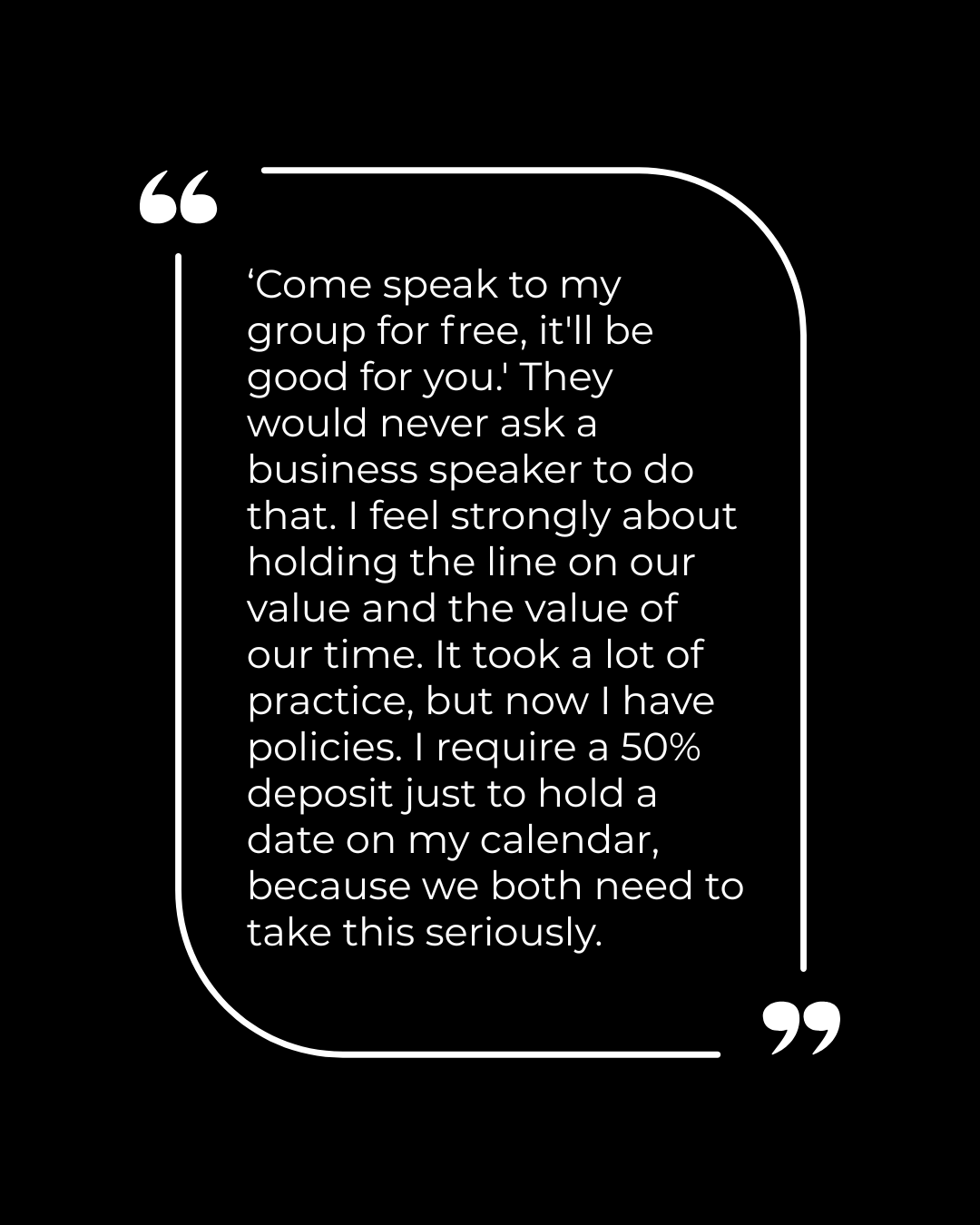
I also feel people don't take creative entrepreneurs as seriously as a hedge fund guy. I have a business plan and a social media strategy. I've had to teach myself to say no to things that don't make money, because people think creatives do everything for fun. 'Come speak to my group for free, it'll be good for you.' They would never ask a business speaker to do that. I feel strongly about holding the line on our value and the value of our time. It took a lot of practice, but now I have policies. I require a 50% deposit just to hold a date on my calendar, because we both need to take this seriously.
What's the most useful advice for someone just starting a business?
At the very beginning, offer your service for free, but only for a short time, to your first few guinea pigs while you work out the kinks. Then offer it at a low cost, so you start to value yourself. Do your absolute best, because testimonials and word of mouth become extremely important. Build up your social proof before you even launch a website, so when you do, you already have five testimonials and don't look brand new. People need to be able to check you out online. Start free, then low-cost, and work your way up. You gain trust, practice and, hopefully, great testimonials.
Putting yourself out there on social media can be terrifying. Where did you find the confidence?
My big push came after COVID. My business was basically decimated. People weren't wearing pants, so they certainly weren't calling personal stylists. I went a good solid year with very little work, not knowing if I'd survive. When things started getting better, I committed to posting three or four times a week for about a year. It was completely exhausting. I'm a fairly natural public speaker, but I've become more introverted as I've gotten older. You're constantly trying to say something fresh without sounding full of yourself. At its core, it's simple: provide value or entertainment. But once the camera turns on, it's way harder.
Now, to protect my peace, I'm more creative about it. I brainstorm how to promote my business without always being on camera, and sometimes I repost an older video with a new caption, so people still see who I truly am. I'm not an influencer making money on affiliate links, so I can only put so much into social media. I've given myself permission to post far less, because the old pace wasn't sustainable.
Why is this work so important to you and to the women you help?
A lot of women have struggled in this area for a really long time. Maybe they don't know how to dress their shape or what looks good on them. Maybe they have a limited budget or struggle to spend money on themselves instead of their kids. We get used to not feeling great. Then, when we finally change it, so many women tell me, "I wish I'd done this 10 years ago."
Many people tell me they get anxious when they're invited somewhere, because they immediately think about what they'll wear. That's such a shame. When you get invited to a party, you should be thinking about the people and the night out. Instead, some women don't go. They're less likely to go out with their husbands because they don't feel pretty.
And often, it doesn't take much. You don't need designer jeans. You need the right jeans for your body. What if we tuck in the shirt and add a necklace? Then they say, "What?" Sometimes a few small changes are all it takes to feel more confident, more comfortable, and better than you have in years.
What brings you joy outside of work?
I just joined a choir! Now that my kids are older, I've been thinking that, as adults, we should try to do the things we loved as children. Music brought me so much joy as a kid. I learned melodies on my keyboard and sang along to my dad's stereo.
I'd been eyeing the Rock Voices choir for about a year. I didn't want a church choir. Then I saw the fall set list, with Aretha Franklin and Stevie Wonder, and signed up before I could second-guess myself. It's a little scary, and sometimes I feel out of my depth, but it's really good for me. When you hear four-part harmony, that's complete magic.
Going alone, I'm meeting so many more people. When you're standing by yourself at the snack table, you talk to everyone. Everyone's so kind. We're all just geeking out on music.
Thanks, Jill! You can learn more about her work at www.jmstylist.com.
Editor’s note: This interview has been edited for length and clarity.
📖 Enjoyed this story? Please consider sharing it with a friend.