How Jaipur Living Weaves Self-Worth


Acworth, Ga. — When Asha Chaudhary talks about her company, she is really telling a family story rooted in conviction, sacrifice and dignity through work.
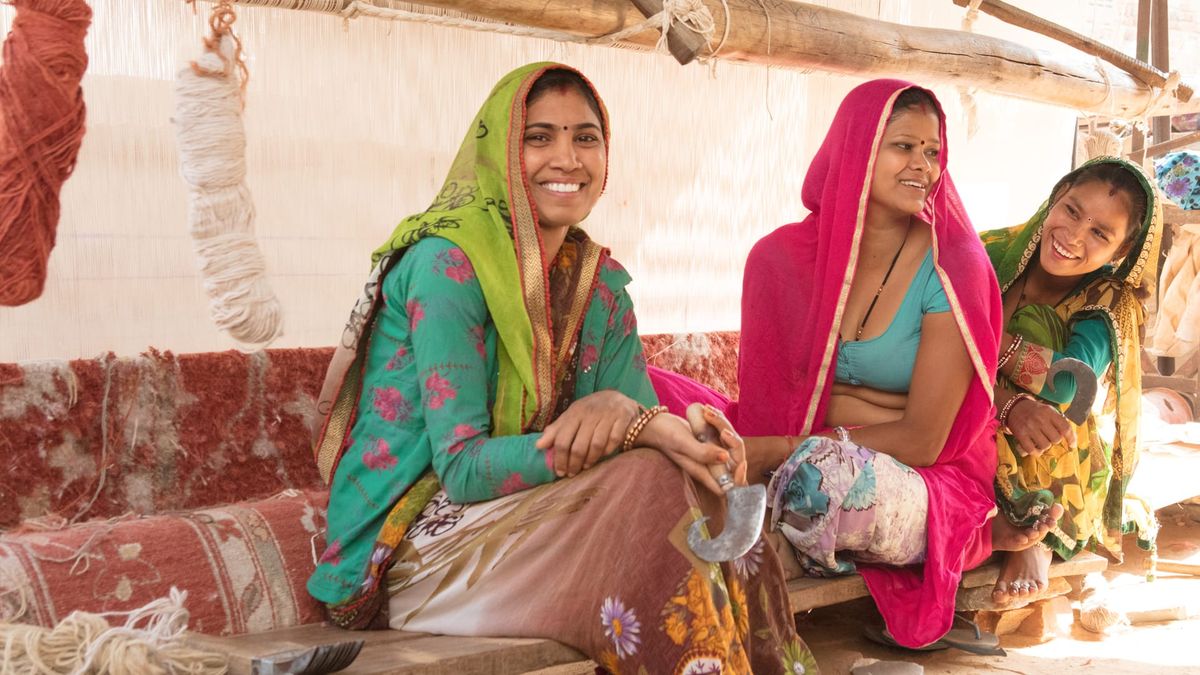
In 1978, in Rajasthan, India, Asha's father, N.K. Chaudhary, turned down a bank job, borrowed 5,000 rupees from his father and launched a hand-woven rug business with two looms, nine weavers and a scooter. What set the business apart from the beginning was who Mr. Chaudhary hired: weavers from communities marginalized under India's caste system. That choice left the Chaudhary family socially isolated for years, but it also laid the groundwork for a business built on social change and handmade craft. Today, that legacy continues through Asha's leadership at Jaipur Living, the U.S.-based extension of her father's original vision.
In the interview that follows, we asked Asha to tell us more about Jaipur Living's artisans and what the handmade economy understands about meaningful work.
AJ: The Manchaha collection turned weavers like Bimla Devi into credited, award-winning designers. What changes in an artisan when something like that happens? How does their village community see them when their name is attached to the work instead of just their hands?
AC: The award is wonderful, but that's not the real transformation.
The real transformation happens much earlier – when an artisan begins to see herself differently.
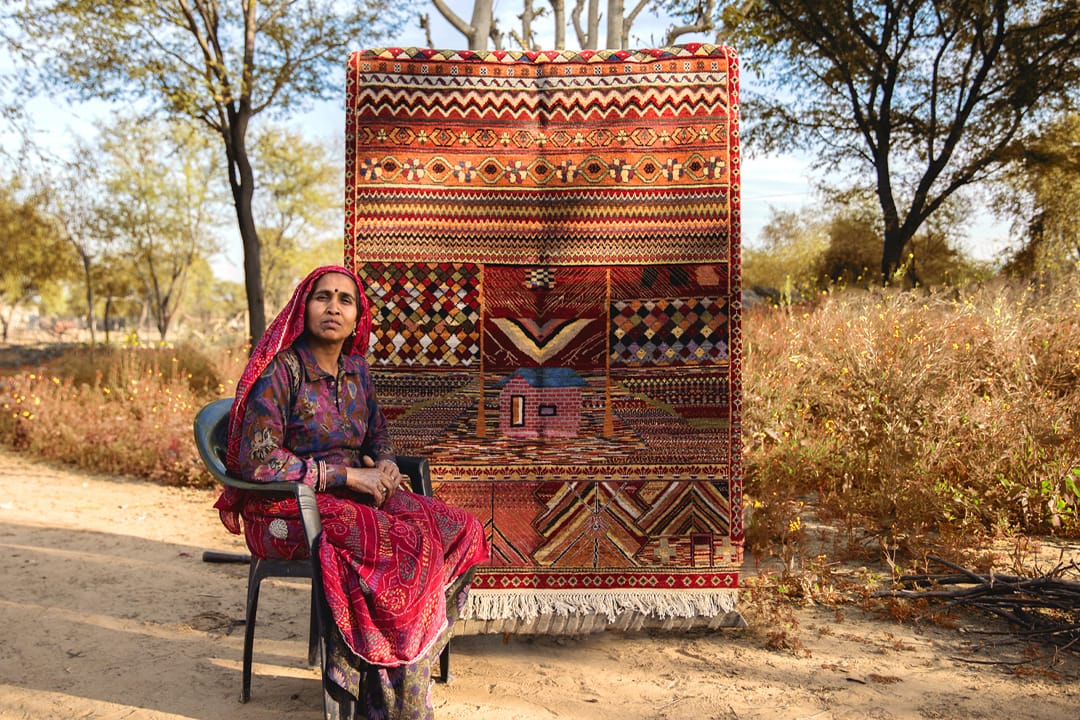
For generations, many of these women were known only by the work they did or the roles they played within their families. Through Manchaha, they are invited to create from their own imagination. For the first time, someone asks them, "What story do you want to tell?" That simple question restores something much deeper than creativity – it restores self-worth.
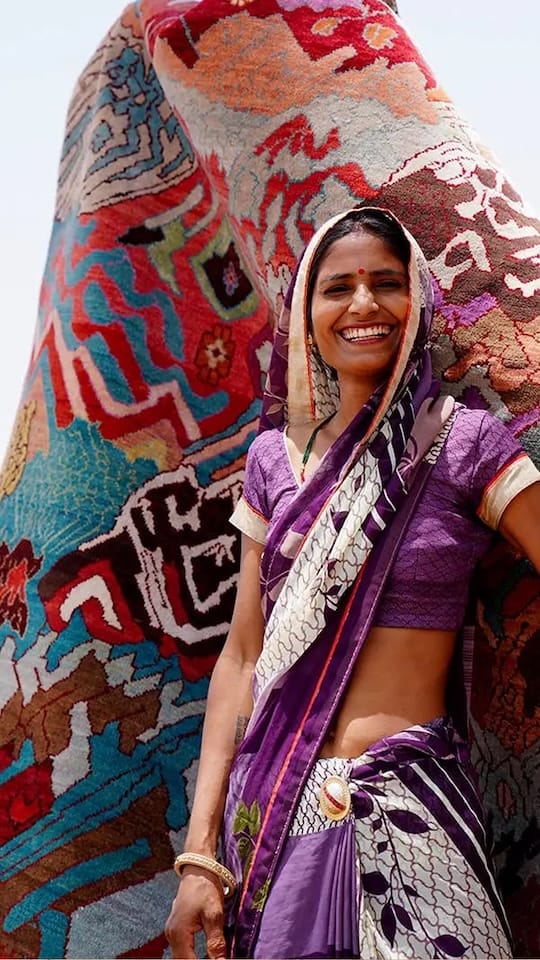
I think of Bimla Devi, who never went to school and had never stepped outside her village. She later traveled to Germany to receive an international award for a rug she designed, inspired by her own memories and imagination.
The award was extraordinary, but what moved me most was what changed inside her. She no longer measured her worth by what society had told her she was. She began to see herself as an artist – with a voice, a story, and something uniquely her own to contribute.
That transformation doesn't stop with one person. It changes how her children see what's possible. It changes how her neighbors see her. It changes how an entire village begins to think about the role of women, creativity, and possibility.
At Jaipur Living, we often say we make rugs. But what we're really weaving is self-worth. When someone begins to believe in their own creativity and value, it doesn't just transform one life – it can transform generations.
AJ: According to Jaipur Living's website, you connect 40,000 artisans in 700 villages to living rooms across the world. As artificial intelligence and automation continue to shape how humans work and the kinds of work we do, what does your business model understand about meaningful work that the rest of us risk forgetting?
AC: I think AI will transform how we work, but I don't believe it will ever replace what makes us human.
Throughout history, the things that have brought people together have never been efficiency or productivity. They've been art, culture, craftsmanship, music, food, and community. Those are the things that help us express who we are and connect us to one another. That's what Jaipur Living has always been built around.
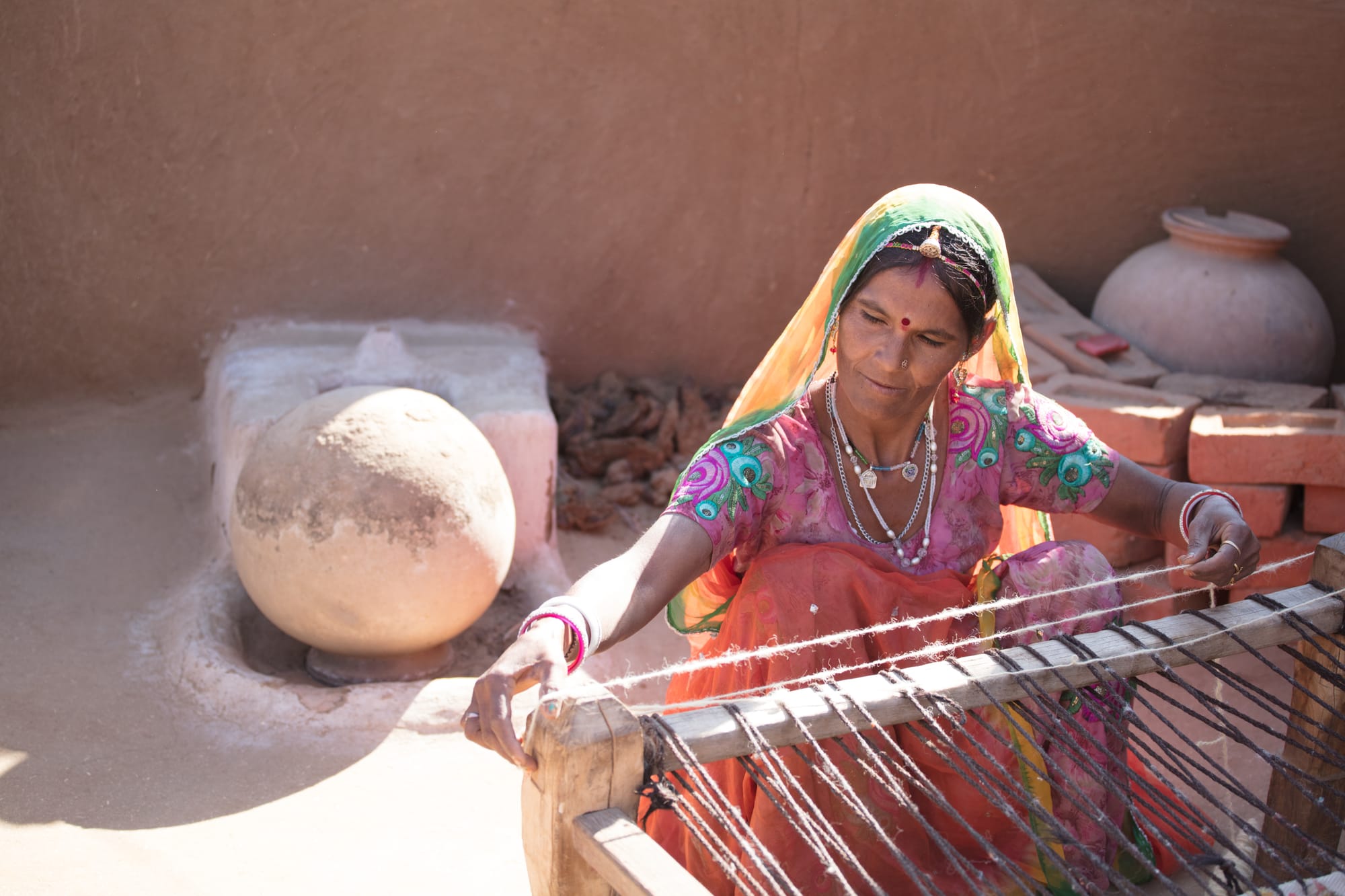
As AI takes over more routine tasks, I believe the qualities that cannot be automated – creativity, craftsmanship, empathy, imagination, and human connection – will become even more valuable. In many ways, they will become the true luxury.
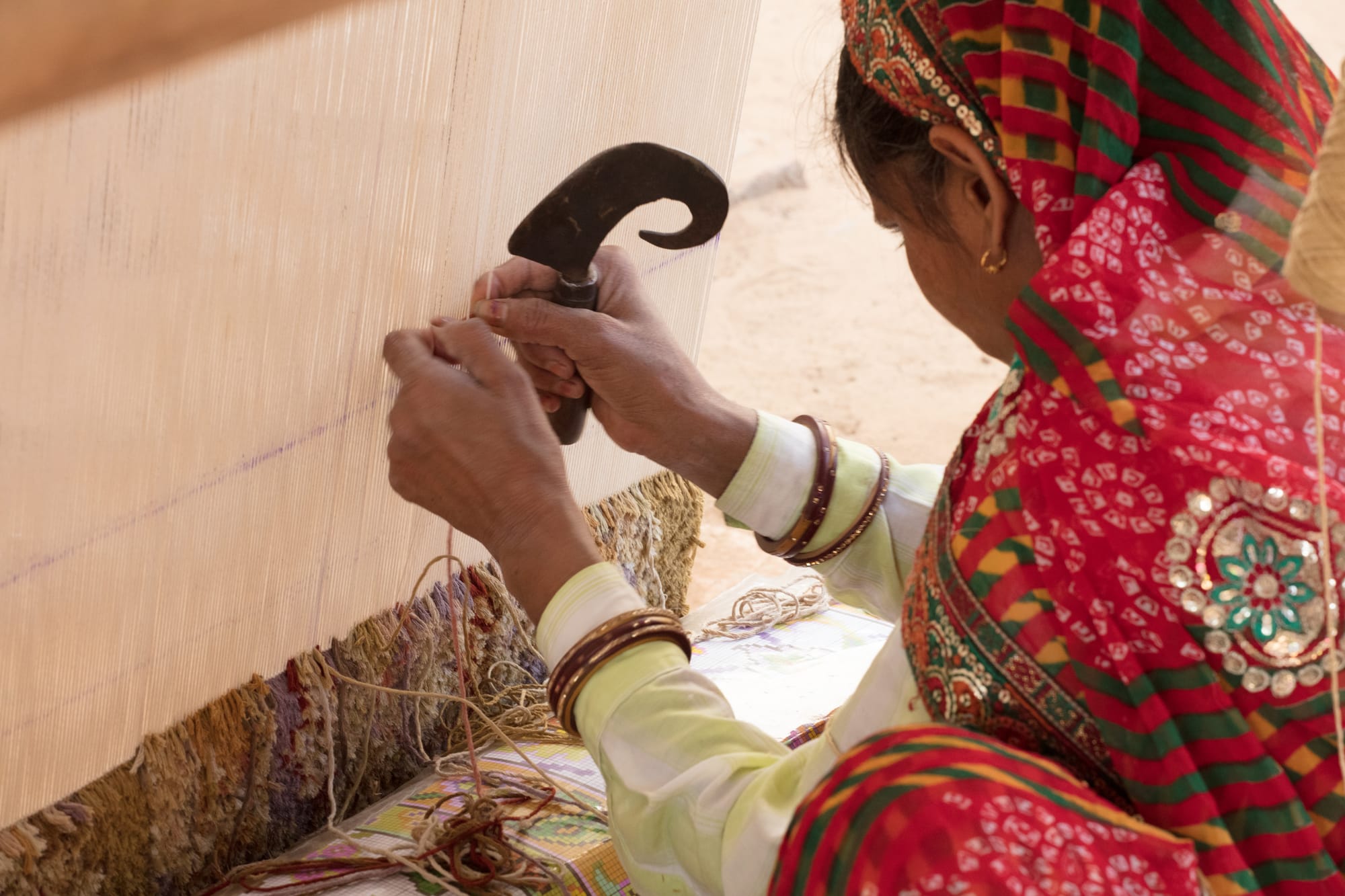
My father often says that business has the power to transform people. I've always believed that's because meaningful work allows us to discover something about ourselves. When people create something with their own hands, they aren't just making a product – they're expressing a piece of who they are.
We embrace technology because it helps us serve our artisans, designers and customers better. But technology should amplify our humanity, not replace it. If we can use innovation to deepen human connection rather than diminish it, I think that's a future worth building.
AJ: Your father's decision to work with marginalized communities meant your family was isolated from your extended relatives while you were growing up. How did living inside that trade-off shape what you were willing to sacrifice or not when you built the U.S. business?
AC: Growing up, I watched my father make choices that were not always understood. Because he chose to work directly with marginalized communities – particularly women from the so-called "untouchable" castes – our family was often isolated from parts of our extended family and society. As a child, I didn't fully understand it. I just knew there were consequences for believing something different.
Looking back, I realize he taught me one of the most important lessons of leadership: if your values never cost you anything, they are probably just preferences.
When I came to the U.S. to build Jaipur Living, I carried that lesson with me. There were certainly easier ways to grow a business. We could have focused only on speed, efficiency, or short-term profit. But I never wanted to separate commercial success from the values the company was built on.
That doesn't mean the choices are always easy. Purpose often asks you to take the longer road. But watching my father taught me that when you are clear about what you stand for, decisions become surprisingly simple. You may not please everyone, but you can live – and lead – with integrity.
Success, to me, is not measured only by what you build. It is also measured by what you are unwilling to compromise in order to build it.
AJ: You work on the responsible growth of the artisan economy beyond your own company. For small makers and craft entrepreneurs, what does Jaipur Living's doorstep model suggest about how craft can pay a real living?
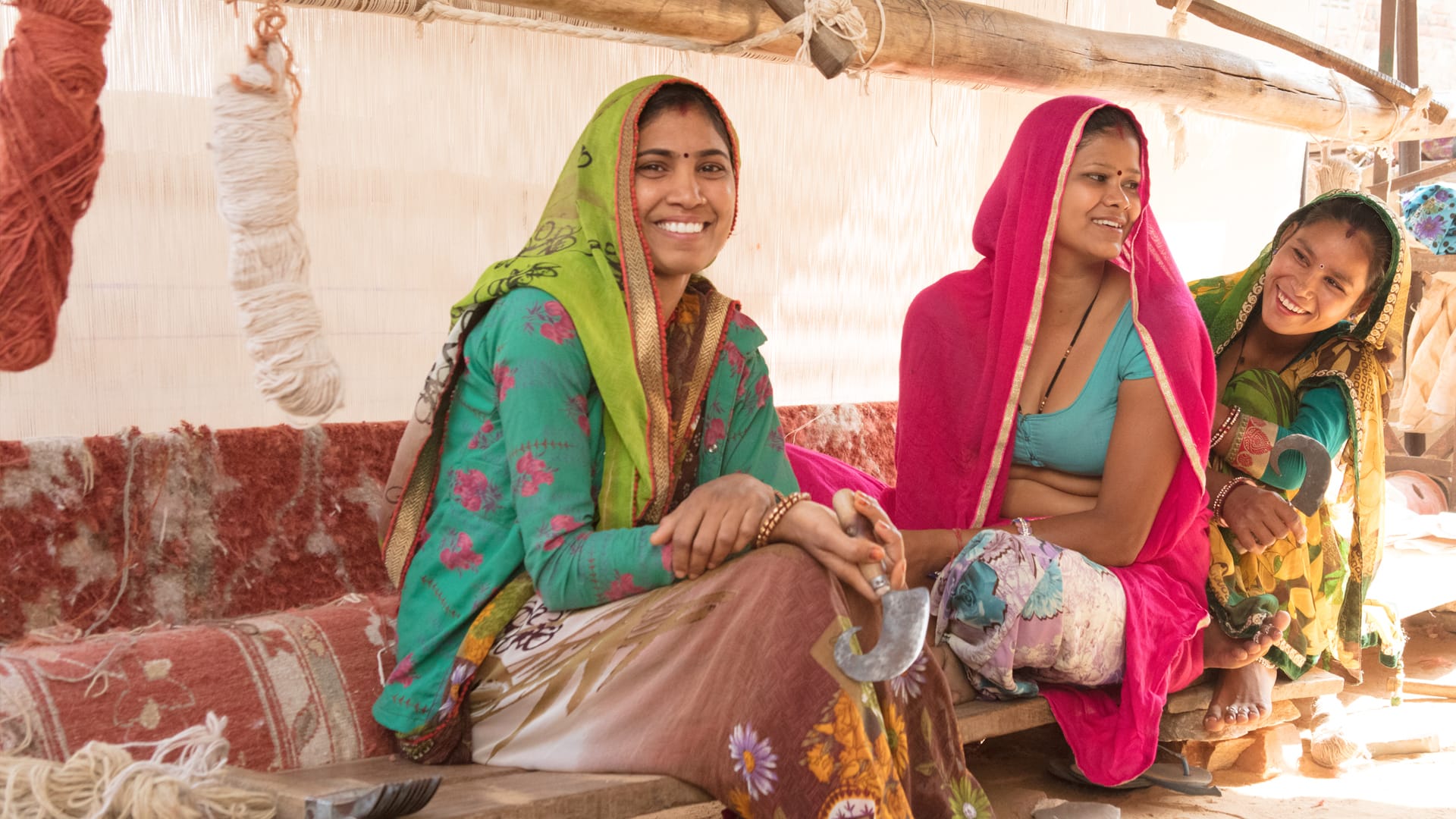
AC: One of the biggest lessons we've learned is that craft doesn't survive because of artisans alone. It survives because of the relationship between the artisan and the person who chooses to bring that craft into their home.
My father often speaks about interdependence. He believes the maker and the buyer are not at opposite ends of a value chain – they are part of the same human story. One creates. The other gives that creation a place in their life. Each depends on the other in ways we don't always see.
Our role has simply been to bring those worlds closer together.
That means providing artisans with the training, market access, and consistent opportunities to build sustainable livelihoods, while helping customers understand the people, stories, and craftsmanship behind what they buy. The closer that connection becomes, the more value is created for everyone.
If we want traditional crafts to survive, they have to be economically viable. But they also have to remain deeply human. I believe the future of craft lies not in preserving it behind glass, but in creating meaningful connections between the hands that make and the homes that cherish it.
AJ: What brings you joy?
AC: The older I get, the more I realize that joy rarely comes from big milestones. It comes from small, deeply human moments.
I find joy in learning – about people, about the world, and about myself. Curiosity has shaped every meaningful chapter of my life. Whether it's visiting an artisan village, exploring a new country, or watching my son discover something for the first time, those moments remind me that there's always more to learn.
I also find tremendous joy in building alongside people. I love being surrounded by teammates who challenge my thinking, who bring different perspectives, and who care enough to debate ideas in pursuit of something better. There is something incredibly fulfilling about learning, growing, and winning together.
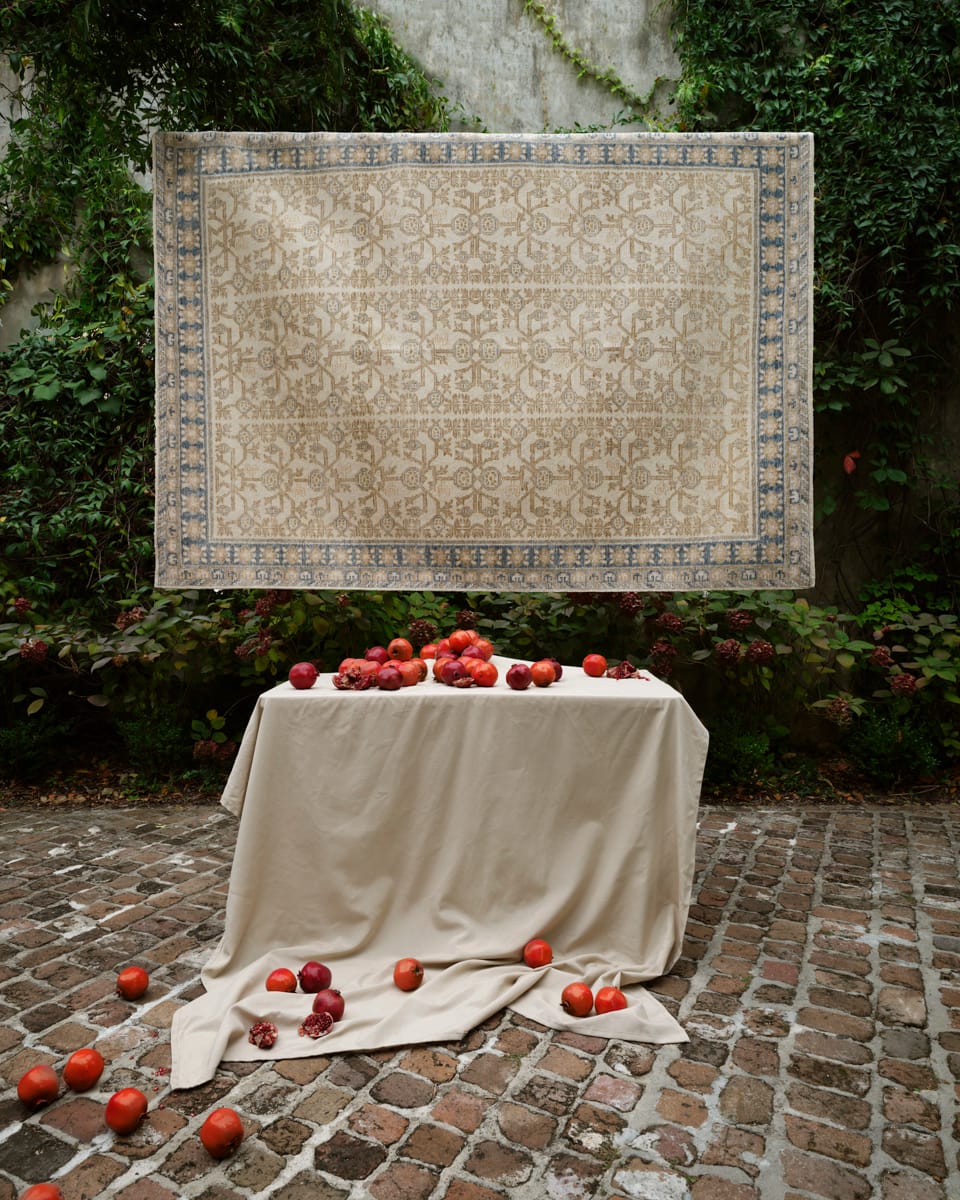
Thanks, Asha! You can learn more about Jaipur Living at www.jaipurliving.com.
Editor’s note: This interview has been edited for length and clarity.
📖 Enjoyed this story? Artisan Joy is a nonprofit magazine celebrating the stories behind the craft. Click here to join us for free, and we’ll send you our Curator’s Starter Pack featuring our 3 most popular articles.